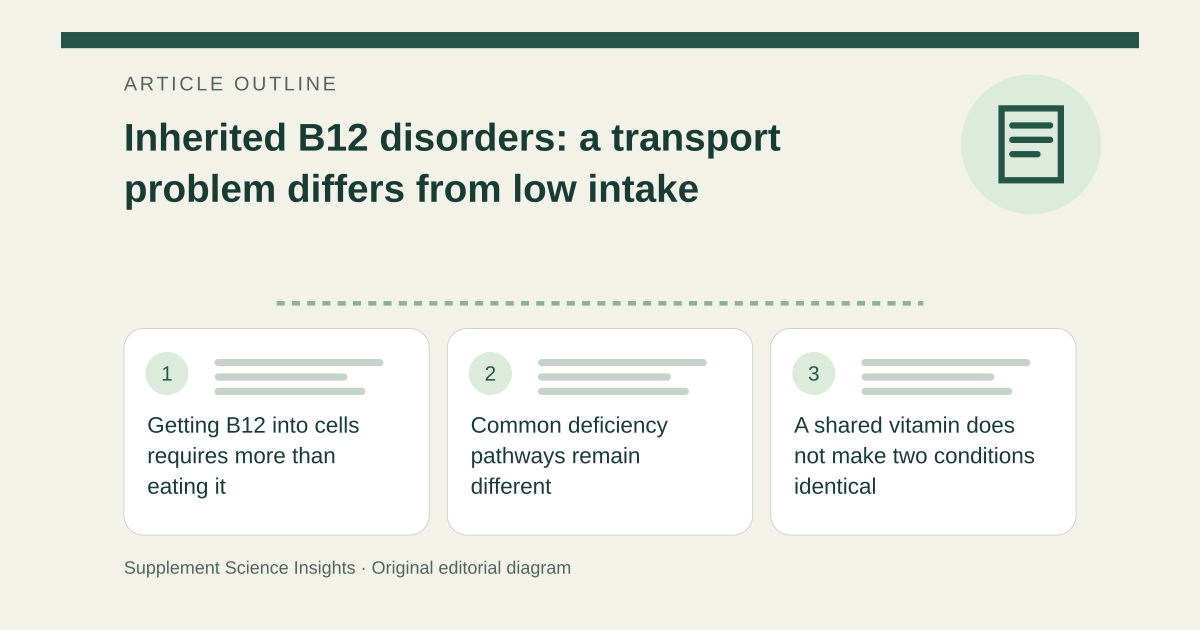
Getting B12 into cells requires more than eating it
MedlinePlus Genetics describes transcobalamin deficiency as a disorder caused by changes in the TCN2 gene. The affected transport protein normally binds B12 and helps deliver it to cells. Defective transport can leave cells without enough usable B12 even when the diet contains the vitamin. [1]
The condition typically becomes apparent in the first weeks or months of life and can involve poor growth, blood-cell abnormalities and neurological problems. It follows an autosomal recessive inheritance pattern. These features describe a defined disorder, not a general prediction based on fatigue or a supplement response. [1]
Common deficiency pathways remain different
Dietary inadequacy, impaired absorption and some medicines can also contribute to B12 deficiency. A family history may be relevant, but neither a low blood result nor an online genetic variant report by itself establishes transcobalamin deficiency. [1][2]
A suspected inherited metabolic disorder requires specialist assessment. A routine dietary supplement plan cannot be assumed to address the same problem as a defect in transport or cellular processing. [1][2]
A shared vitamin does not make two conditions identical
Imagine one person has inadequate dietary B12 and an infant has a confirmed transport disorder. Both involve B12 availability, but the diagnostic question and management are different. Giving them the same explanation would discard the cause.
| Observation | What it establishes |
|---|---|
| Dietary gap | Limited intake |
| TCN2 disorder | Impaired transport |
| Low result alone | Does not diagnose inheritance |
Sources for this article
- MedlinePlus Genetics: Transcobalamin deficiency
Source consulted: 2026-09-17. This is a reference resource, not a claim that we conducted the studies or tested a product. - NIH ODS: Vitamin B12
Source consulted: 2026-09-17. This is a reference resource, not a claim that we conducted the studies or tested a product.