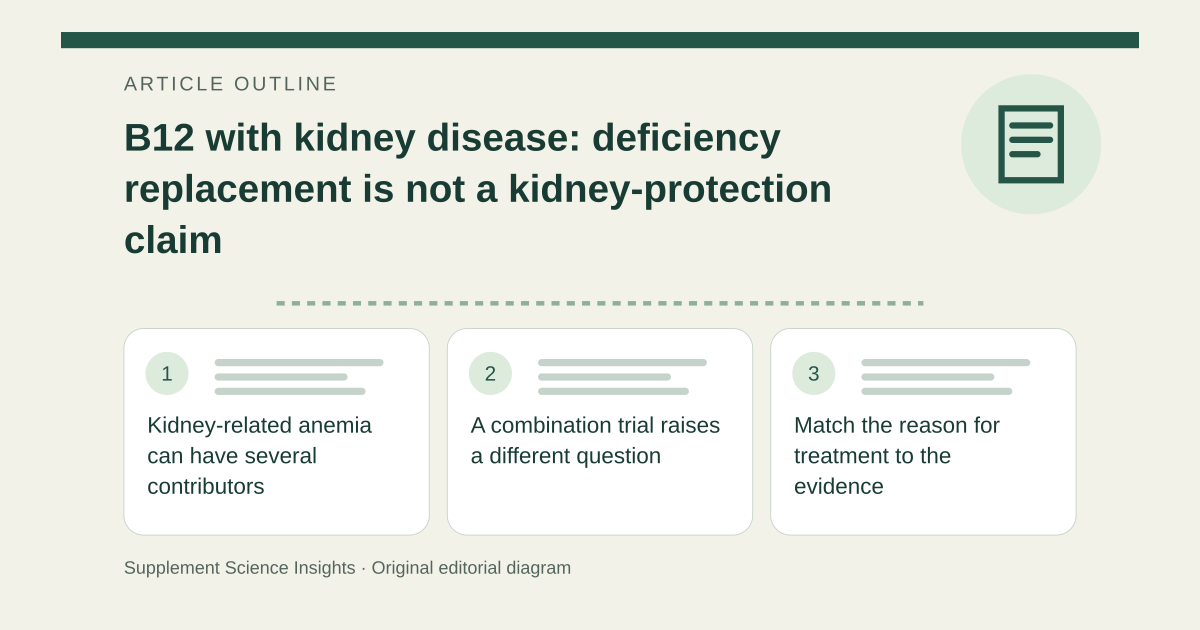
Kidney-related anemia can have several contributors
NIDDK explains that anemia in chronic kidney disease can involve inadequate erythropoietin, nutrient deficiencies and other causes. B12 or folate replacement may be advised when the body does not have enough of these nutrients. [1]
This does not mean all anemia in kidney disease responds to B12. Treatment follows the identified causes and the kidney care plan. [1]
A combination trial raises a different question
The DIVINe trial randomized 238 people with diabetic nephropathy to placebo or a high-dose tablet containing folic acid, B6 and B12. Over follow-up averaging about 32 months, the combination lowered homocysteine but produced a greater decline in measured GFR and more composite vascular events. [2]
Because all three vitamins were given together, the trial cannot isolate B12 as the cause. It also does not test ordinary deficiency replacement or all forms of kidney disease. [2]
Match the reason for treatment to the evidence
Imagine a person needs B12 replacement for confirmed deficiency. A trial of a high-dose three-vitamin kidney-protection strategy is not a direct test of that replacement decision.
| Detail | Interpretation |
|---|---|
| Deficiency replacement | Treats an identified shortage |
| High-dose combination | Different intervention and goal |
| Individual B12 effect | Not isolated by the trial |
Sources for this article
- Anemia in Chronic Kidney Disease - NIDDK
Source consulted: 2026-09-19. This is a reference resource, not a claim that we conducted the studies or tested a product. - Effect of B-vitamin therapy on progression of diabetic nephropathy: a randomized controlled trial - PubMed
Source consulted: 2026-09-19. This is a reference resource, not a claim that we conducted the studies or tested a product.