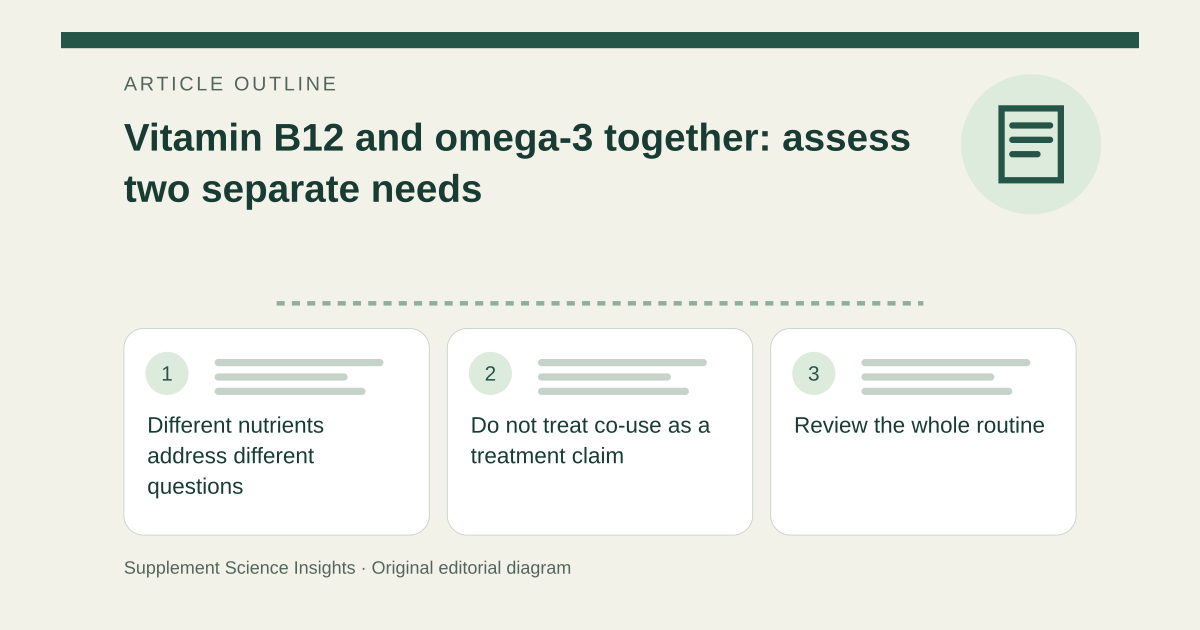
Different nutrients address different questions
Vitamin B12 supports normal blood-cell formation and neurological function. Omega-3 fatty acids have different biological roles; the label may supply plant-derived ALA or marine EPA and DHA. One cannot substitute for the other, and those functions do not show that adding both improves a particular symptom. [1][2]
Do not treat co-use as a treatment claim
The cited ODS fact sheets do not establish a required separation interval between B12 and omega-3. That is not an individualized safety clearance or proof of synergy. A B12 deficiency plan may depend on absorption problems, while an omega-3 decision depends on the actual fatty acids, amount and intended outcome. [1][2]
Review the whole routine
Imagine a person uses metformin and an anticoagulant. Metformin can affect B12 status, and omega-3 use should be discussed with the clinician managing anticoagulation. These are separate considerations that a generic statement about two supplements being compatible would miss. Record the exact products rather than just their category names. [1][2]
| Situation | Interpretation |
|---|---|
| B12 deficiency plan | Depends on cause and absorption |
| Omega-3 preparation | Identify ALA or EPA/DHA |
| Same daily routine | Does not demonstrate extra benefit |
Sources for this article
- Vitamin B12 - Health Professional Fact Sheet
Source consulted: 2026-09-20. This is a reference resource, not a claim that we conducted the studies or tested a product. - Omega-3 Fatty Acids - Health Professional Fact Sheet
Source consulted: 2026-09-20. This is a reference resource, not a claim that we conducted the studies or tested a product.