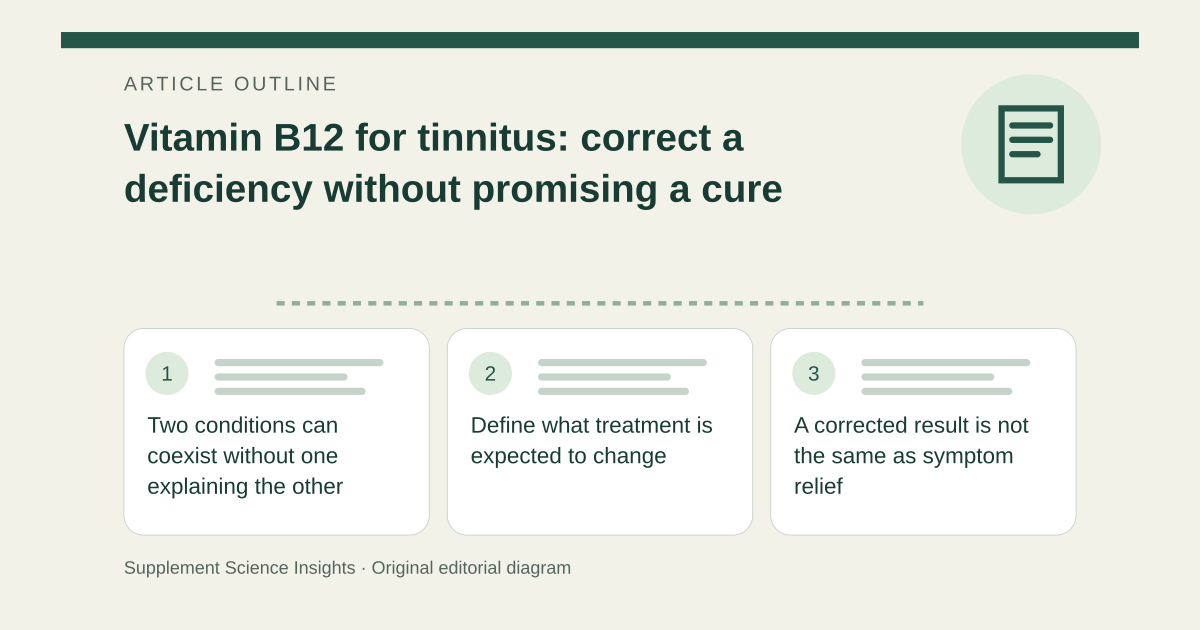
Two conditions can coexist without one explaining the other
A person can have tinnitus and a low B12 result at the same time. That coexistence is a reason to address each finding appropriately, not evidence that B12 deficiency caused the tinnitus. [1][2]
NICE provides a pathway for assessing and managing deficiency. NIDCD’s tinnitus information separately explains that vitamin and supplement cure claims lack established effectiveness. [1][2]
Define what treatment is expected to change
B12 replacement can be indicated because of the deficiency itself. Improvement in a B12 laboratory result does not automatically demonstrate improvement in ringing, distress or hearing. [1][2]
Seek assessment of the tinnitus rather than relying on a supplement trial alone. The appropriate management may involve hearing-related care and strategies for reducing its impact, depending on the cause and presentation. [1][2]
A corrected result is not the same as symptom relief
Imagine B12 levels improve during treatment but tinnitus remains unchanged. That does not make the deficiency treatment pointless; it shows why a blood result and a tinnitus outcome must be tracked separately.
| Detail | Interpretation |
|---|---|
| Confirmed deficiency | Has its own treatment indication |
| Tinnitus cure | Not established for B12 generally |
| Outcome assessment | Measure the symptom itself |
Sources for this article
- What Is Tinnitus? — Causes and Treatment | NIDCD
Source consulted: 2026-09-19. This is a reference resource, not a claim that we conducted the studies or tested a product. - Recommendations | Vitamin B12 deficiency in over 16s: diagnosis and management | Guidance | NICE
Source consulted: 2026-09-19. This is a reference resource, not a claim that we conducted the studies or tested a product.