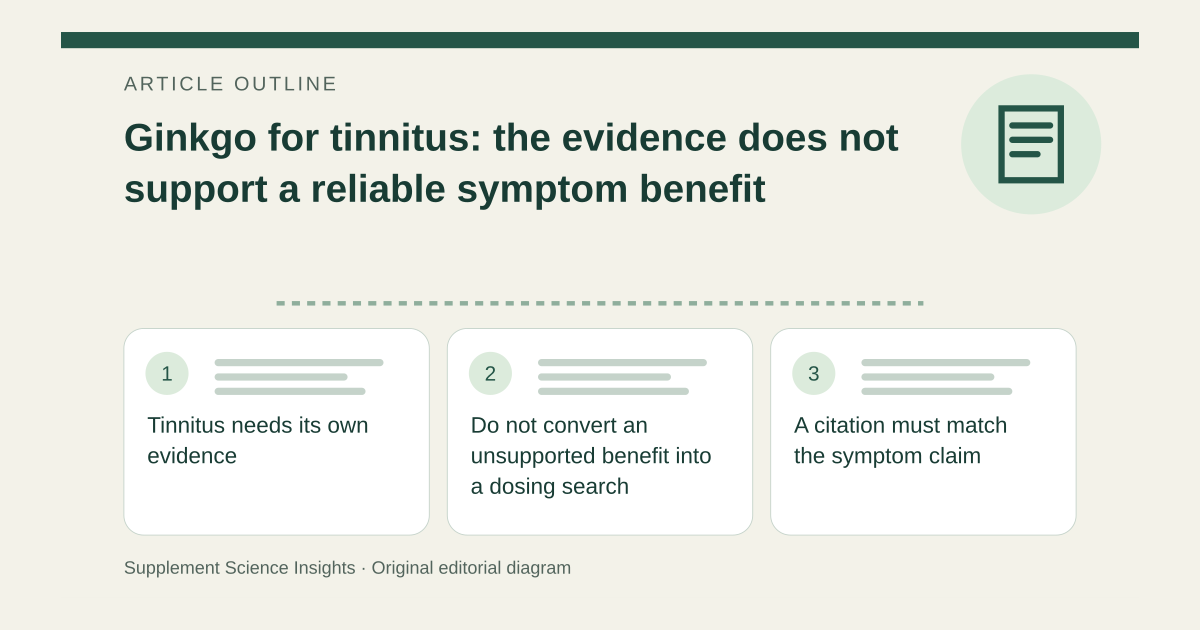
Tinnitus needs its own evidence
NCCIH states that research suggests ginkgo is not helpful for relieving tinnitus symptoms. This is a condition-specific finding. It cannot be replaced by a claim about circulation, a memory-test result or a possible effect in another neurological condition. [1]
A supplement can have a proposed biological action without producing a clinically useful change in the symptom being studied. The relevant outcomes include the tinnitus experience and its impact, measured against an appropriate comparison group. [1]
Do not convert an unsupported benefit into a dosing search
The summary does not establish a dose or a waiting period that reliably makes ginkgo work for tinnitus. Trying progressively larger amounts is not a way to resolve a negative evidence base. [1]
Ginkgo can cause dizziness, headache and gastrointestinal effects, and may increase bleeding risk with anticoagulants such as warfarin. Discuss persistent or troubling tinnitus and any proposed supplement with a healthcare provider so the symptom and medication context can be assessed together. [1]
A citation must match the symptom claim
Imagine an advertisement cites a memory study to promise less ringing in the ears. Even if the memory result were favorable, it would not answer the tinnitus question. The proposed benefit needs evidence that actually measured tinnitus.
| Item | Interpretation |
|---|---|
| Memory study | A cognitive outcome |
| Tinnitus relief | A separate clinical question |
| Shared brain-health slogan | Does not connect the evidence |
Sources for this article
- NCCIH: Ginkgo
Source consulted: 2026-09-17. This is a reference resource, not a claim that we conducted the studies or tested a product.