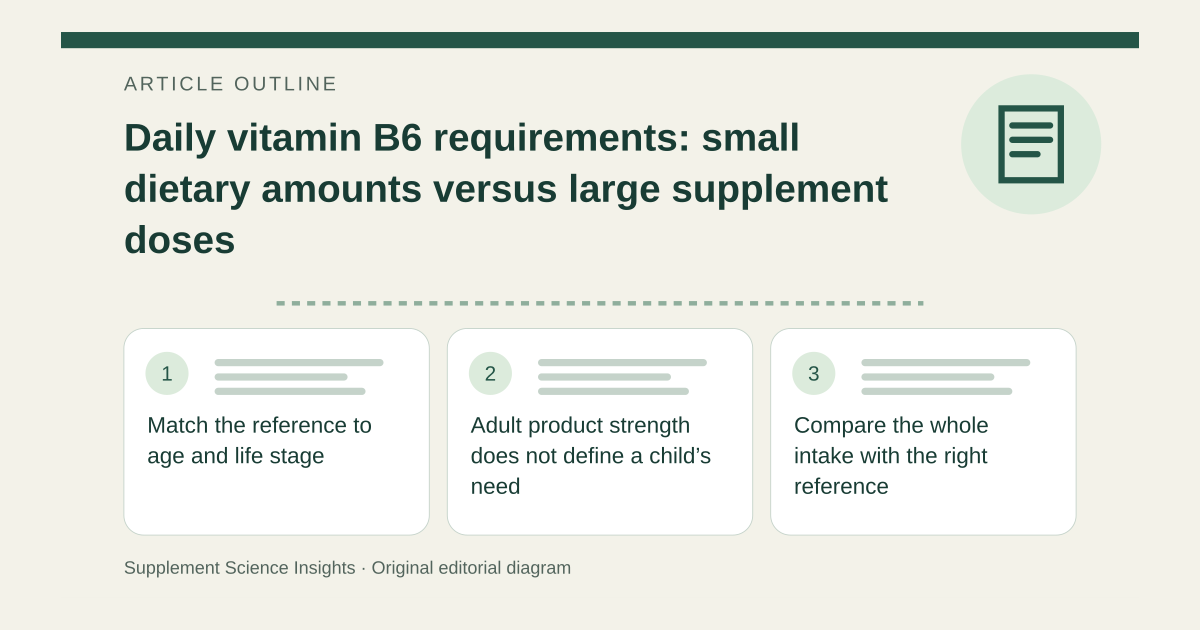
Match the reference to age and life stage
The U.S. recommended intake for adults aged 19–50 is 1.3 mg of vitamin B6 per day. From age 51, the values are 1.7 mg for men and 1.5 mg for women. Pregnancy and breastfeeding references are 1.9 mg and 2.0 mg respectively. [1]
These are total-intake values for healthy people. They are not instructions to add the full amount as a supplement after food and an existing multivitamin have already supplied some B6. [1]
Adult product strength does not define a child’s need
Children have lower reference values: 0.5 mg at ages 1–3, 0.6 mg at ages 4–8 and 1.0 mg at ages 9–13. Adolescents have their own values. Age-specific needs should not be estimated from the fraction of an adult tablet that seems convenient. [1]
A treatment regimen for a diagnosed problem is a separate matter from ordinary nutrient intake. The clinical indication and product instructions need professional review. [1]
Compare the whole intake with the right reference
Imagine a woman older than 50 sees the 1.5 mg reference and already takes a multivitamin containing B6. She should count that product and her diet rather than assume another 1.5 mg is automatically needed.
The calculation establishes a documented intake subtotal, not whether her symptoms are caused by deficiency or how much treatment she should receive.
| Item | Meaning |
|---|---|
| Age 19–50 | 1.3 mg daily reference |
| Woman aged 51 or older | 1.5 mg daily reference |
| Existing multivitamin | Counts toward the total |
Much larger doses are not simply more complete nutrition
Excess supplemental B6 can cause sensory nerve damage. A B-complex, magnesium product and multivitamin may all contribute B6, so the highest single label may not represent the total. [1]
Keep recommended intake separate from upper-limit or treatment-dose discussions. If neurological symptoms or a suspected deficiency are present, assess the cause rather than increasing B6 on the assumption that a vitamin must be harmless. [1]
Sources for this article
- NIH ODS — Vitamin B6: Health Professional Fact Sheet
Source consulted: 2026-09-17. This is a reference resource, not a claim that we conducted the studies or tested a product.