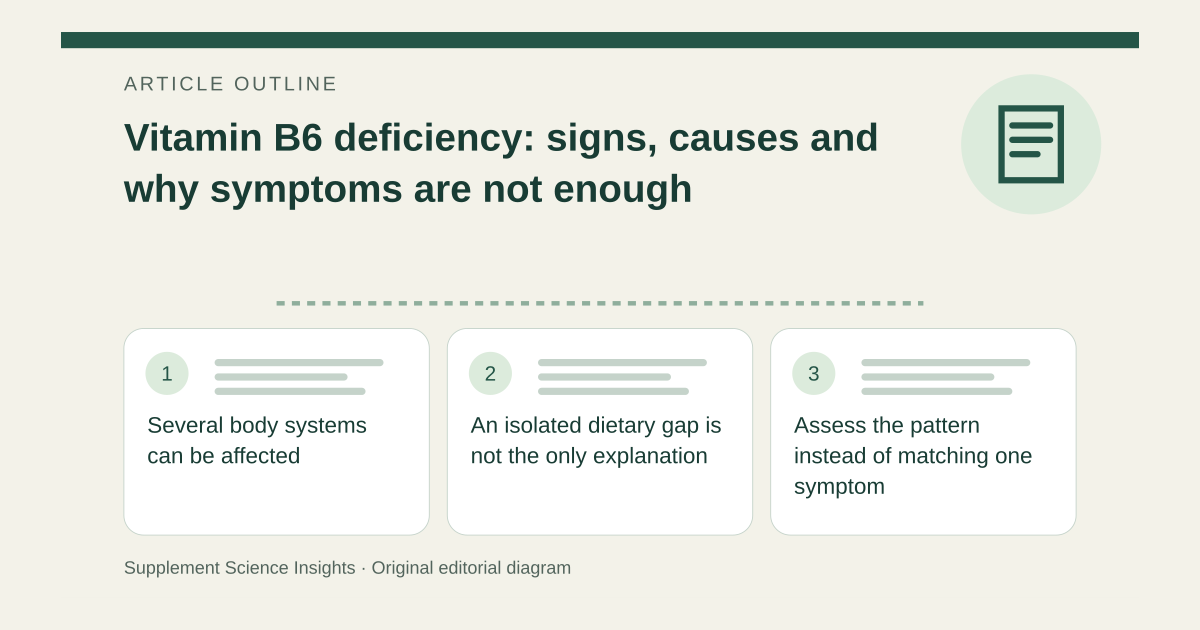
Several body systems can be affected
ODS associates B6 deficiency with microcytic anemia, skin inflammation, cracks around the mouth, a swollen tongue, depression or confusion and impaired immune function. Mild deficiency can be present without obvious symptoms. [1]
These findings are not specific to B6. A sore tongue, fatigue or mood change cannot identify which nutrient, if any, is responsible, and similar complaints can arise for non-nutritional reasons. [1]
An isolated dietary gap is not the only explanation
B6 inadequacy commonly occurs with low levels of other B vitamins rather than alone. Kidney disease, malabsorption conditions and some medicines can contribute. ODS identifies certain antiepileptic drugs as a possible cause over time. [1]
The medicine name and underlying condition matter. Do not stop a prescription to address a suspected nutrient problem; the clinician can evaluate replacement and the treatment together. [1]
Assess the pattern instead of matching one symptom
Imagine someone with a digestive disorder develops mouth soreness and buys a high-dose B6 product after recognizing the symptom online. The symptom does not prove an isolated B6 deficiency or exclude other deficiencies.
A useful assessment includes the food pattern, digestive history, medicines and appropriate investigations. The aim is to identify the cause rather than simply try larger doses.
| Item | Meaning |
|---|---|
| Nonspecific symptom | Does not identify B6 by itself |
| Malabsorption or kidney disease | Adds a relevant risk context |
| Several B6-containing products | Must be included in the exposure history |
Replacement and excess are separate risks
High supplemental B6 intake can itself damage sensory nerves. Adding multiple products while investigating symptoms can therefore create a new exposure problem. [1]
This page summarizes deficiency associations and risk contexts. It does not diagnose an individual, choose a treatment dose or establish that a response to an unmonitored supplement trial proves the original cause. [1]
Sources for this article
- NIH ODS — Vitamin B6: Health Professional Fact Sheet
Source consulted: 2026-09-17. This is a reference resource, not a claim that we conducted the studies or tested a product.