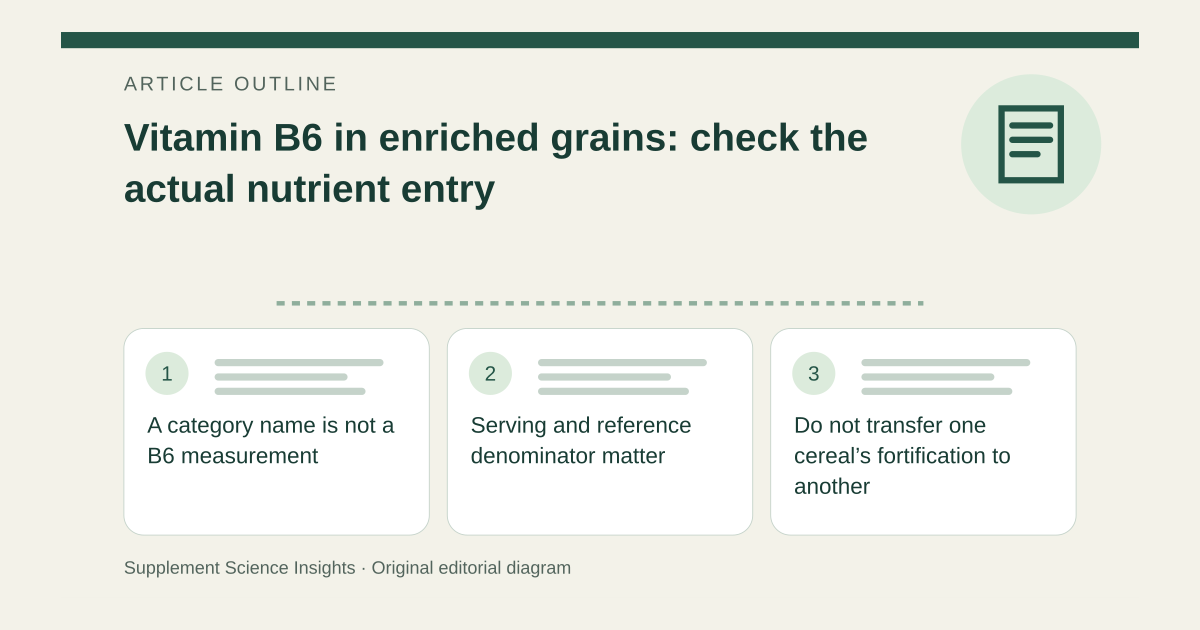
A category name is not a B6 measurement
ODS identifies fortified cereals as one contributor to B6 intake, but grain products do not all supply the same amount. In its table, a cereal fortified with a quarter of the B6 Daily Value differs from the entry for cooked enriched white rice. [1]
Do not infer a large B6 amount merely from the words enriched or cereal. Use the actual nutrient declaration or reliable composition data for the food and serving in question. [1]
Serving and reference denominator matter
The ODS table lists approximately 0.1 mg B6 in a cup of cooked enriched long-grain white rice. Its fortified-cereal example is defined by the product providing 25% of the Daily Value, rather than by every cereal having that composition. [1]
The adult and age-four-plus labeling Daily Value is 1.7 mg. It is a label-comparison reference and is not identical to every person’s age- and life-stage-specific recommended intake. [1]
Do not transfer one cereal’s fortification to another
Imagine a person uses the B6 percentage from one breakfast cereal to estimate a different grain food that only says enriched. The estimate is unsupported because the nutrient amounts and serving definitions have not been matched.
Checking the actual label can resolve the product question. If a food does not declare B6, the absence of that line should not be turned into a precise zero without other information.
| Observation | Interpretation |
|---|---|
| Specific product and serving | Defines the comparison |
| B6 amount or percentage | Use the actual declaration |
| Enriched wording alone | Does not quantify B6 intake |
Grains are not the only B6 sources
Fish, poultry, potatoes, chickpeas and some fruit also contribute B6. A varied dietary review is therefore more informative than judging adequacy from one grain product. [1]
This article explains food comparison rather than prescribing a supplement. A medical concern about B6 status needs the broader intake and clinical context. [1]
Sources for this article
- NIH ODS — Vitamin B6: Health Professional Fact Sheet
Source consulted: 2026-09-17. This is a reference resource, not a claim that we conducted the studies or tested a product.