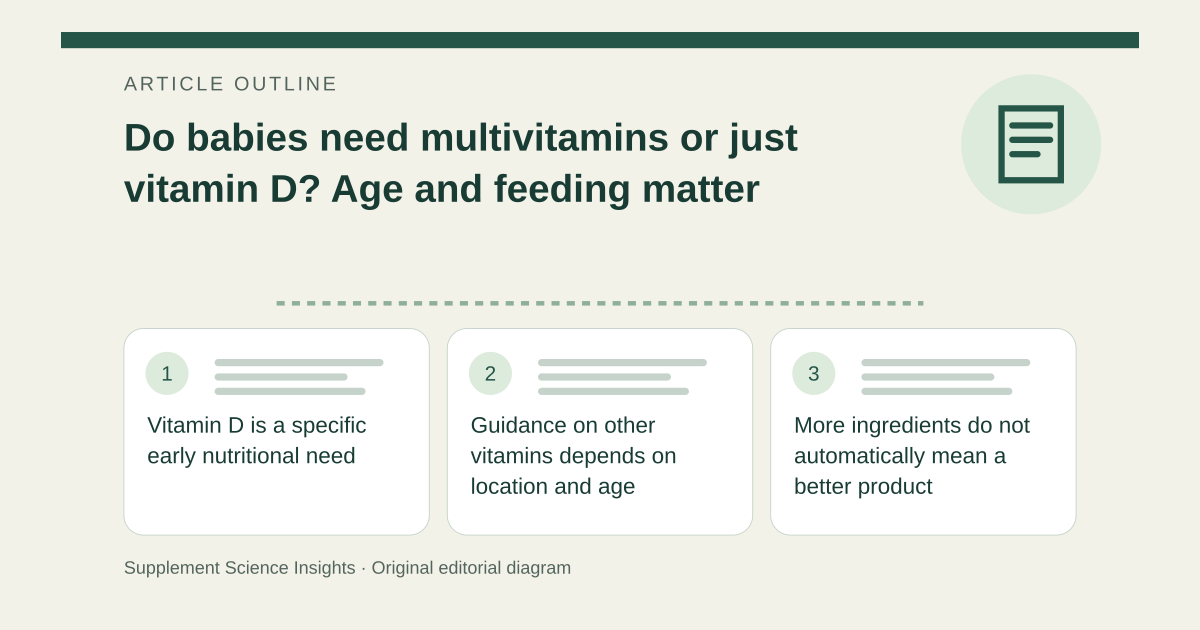
Vitamin D is a specific early nutritional need
CDC recommends 400 IU of vitamin D daily for children younger than twelve months. Breastfed or mixed-fed babies are generally advised to receive a supplement beginning shortly after birth. For babies receiving only formula, CDC says supplementation is not needed when intake reaches 32 ounces daily. Review mixed feeding with the pediatric team. [1]
Guidance on other vitamins depends on location and age
The NHS baby guidance recommends vitamin D from birth for breastfed babies and vitamin A, C and D supplements from six months to five years, unless the child receives at least 500 mL of first infant formula daily. This is UK guidance with a different threshold from the CDC page; do not combine the two into one universal rule. [2]
More ingredients do not automatically mean a better product
A single-nutrient preparation can meet a specific recommendation, while an age-appropriate combination may fit a different local plan. What matters is the amount of each nutrient already supplied by feeding and other products. Read the label and confirm the intended product rather than selecting an adult or general family multivitamin. [2][1]
Concentration and changes in feeding require attention
An IU amount is not the same as a number of drops or milliliters. Different products can deliver different amounts in the same volume. Review the plan when formula quantity, feeding pattern or age changes, and do not add a second product without checking duplicate vitamin D and other ingredients. [3][1]
Make the decision specific to the baby
Imagine a parent already gives vitamin D drops and buys a multivitamin containing D. Bring both labels and the feeding history to the pediatric clinician or health visitor. The goal is one appropriate plan, not two overlapping products based on separate recommendations. [2][1]
| Information | Why it matters |
|---|---|
| Age | Recommendations change as children grow |
| Breast milk and formula amounts | Determines supplied nutrients |
| Country-specific guidance | Thresholds and combinations differ |
| All product concentrations | Prevents accidental overlap or volume errors |
Sources for this article
- Vitamin D | Infant and Toddler Nutrition | CDC
Source consulted: 2026-09-21. This is a reference resource, not a claim that we conducted the studies or tested a product. - Baby vitamins - Best Start in Life - NHS
Source consulted: 2026-09-21. This is a reference resource, not a claim that we conducted the studies or tested a product. - Vitamin D - Health Professional Fact Sheet
Source consulted: 2026-09-21. This is a reference resource, not a claim that we conducted the studies or tested a product.