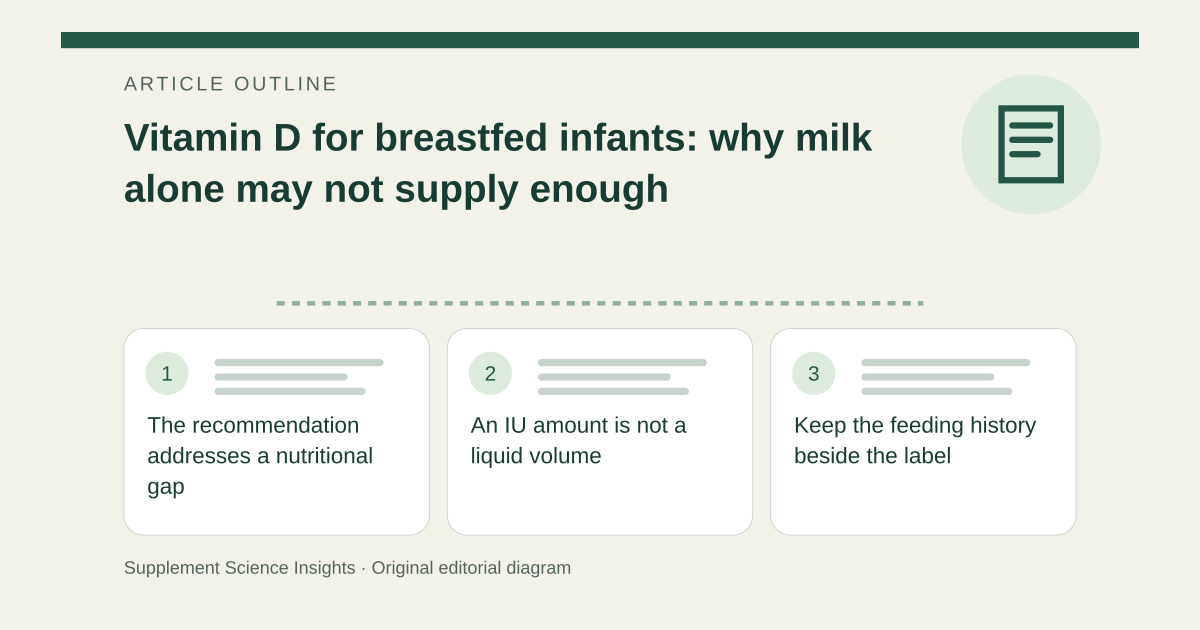
The recommendation addresses a nutritional gap
Human milk usually supplies relatively little vitamin D. The NIH ODS summary describes a daily 10-microgram, or 400-IU, supplement recommendation for exclusively and partially breastfed infants beginning shortly after birth. This preventive guidance is not evidence that breastfeeding is inadequate in general. [1]
Formula contributes vitamin D, so feeding quantity matters to the assessment. ODS also describes supplementation for formula-fed infants who consume less than about one liter of fortified formula daily. A pediatric clinician can reconcile mixed feeding and changes over time. [1]
An IU amount is not a liquid volume
The nutrient amount and the milliliters used to deliver it are different measurements. A drop from one preparation cannot be assumed equivalent to a dropperful from another. Check the labeled concentration and the measuring device with the pediatric team. [1]
Sun exposure should not be used as a measured substitute: ODS cites advice to keep infants younger than six months out of direct sunlight. This article describes routine prevention, not treatment for a suspected deficiency or an accidental excess. [1]
Keep the feeding history beside the label
Imagine an infant changes from partial breastfeeding to a different amount of fortified formula. The earlier feeding record no longer describes the current vitamin D contribution. Review the new daily volume and exact drop product instead of carrying a remembered dose volume forward automatically.
| Detail | Interpretation |
|---|---|
| Milk feeding pattern | Record current pattern |
| Formula quantity | Contributes to vitamin D intake |
| Drop concentration | Required to interpret a measured volume |
Sources for this article
- NIH ODS: Vitamin D
Source consulted: 2026-09-17. This is a reference resource, not a claim that we conducted the studies or tested a product.