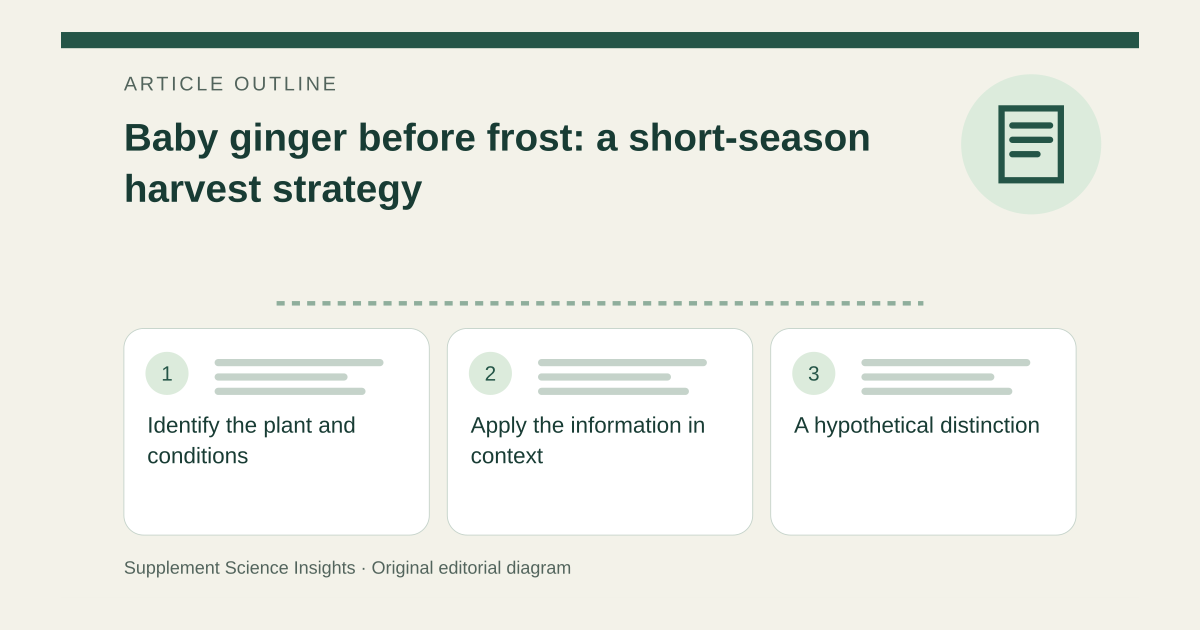
Identify the plant and conditions
The extension guide describes producing thin-skinned baby ginger in North Carolina gardens in zone 7 or warmer. It recommends transplanting hardened sprouts after frost danger into well-drained, organic-rich soil. [1]
Allowing growth until close to frost can extend the harvest period. The tender harvested rhizomes need refrigeration or processing rather than being treated like indefinitely shelf-stable dried ginger. [1]
Apply the information in context
This is a seasonal crop strategy, not proof that tropical ginger survives every local winter outdoors. A hardiness-zone statement in a harvest guide should be interpreted alongside its planting and harvest timing. [1]
A hypothetical distinction
Imagine a crop succeeds from spring to autumn but is harvested before freezing weather. Its successful harvest does not demonstrate that an unharvested plant would survive the winter.
| Detail | Interpretation |
|---|---|
| Baby ginger | Tender seasonal harvest |
| After frost danger | Transplant context |
| Refrigeration or processing | Postharvest distinction |
Sources for this article
- Edible Baby Ginger: A Spicy, Super Addition to Home Gardens - Extension Gardener | NC State Extension
Source consulted: 2026-09-19. This is a reference resource, not a claim that we conducted the studies or tested a product.