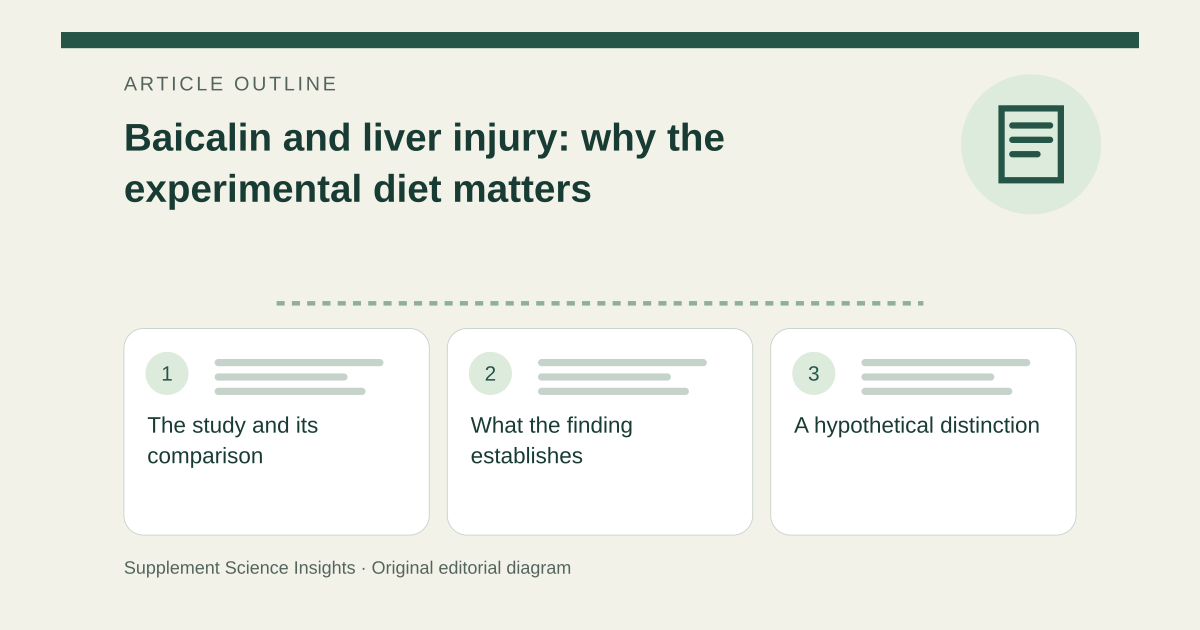
The study and its comparison
Researchers fed mice a methionine- and choline-deficient diet for four weeks to induce liver injury. Baicalin treatment occurred over the same period, and investigators assessed tissue staining, blood markers and molecular pathways. [1]
The treated animals showed less fat accumulation, inflammation, fibrosis-related change and cell-death signaling than the untreated disease-model animals. [1]
What the finding establishes
A deficiency-induced model does not reproduce every feature of human metabolic liver disease. Concurrent treatment is also different from reversing longstanding illness. Sample size and complete exposure details were not established from the abstract. Funding and conflicts were not established. The findings do not validate a baicalin supplement as a substitute for clinical assessment. [1]
A hypothetical distinction
Imagine an intervention begins when experimental injury begins. Calling that reversal of years of disease would overstate the design.
| Detail | Interpretation |
|---|---|
| Measured outcome | Keep the endpoint specific |
| Study preparation | Not every retail product |
| Remaining uncertainty | Not resolved by a mechanism |
Sources for this article
- Baicalin attenuates non-alcoholic steatohepatitis by suppressing key regulators of lipid metabolism, inflammation and fibrosis in mice.
Source consulted: 2026-09-19. This is a reference resource, not a claim that we conducted the studies or tested a product.