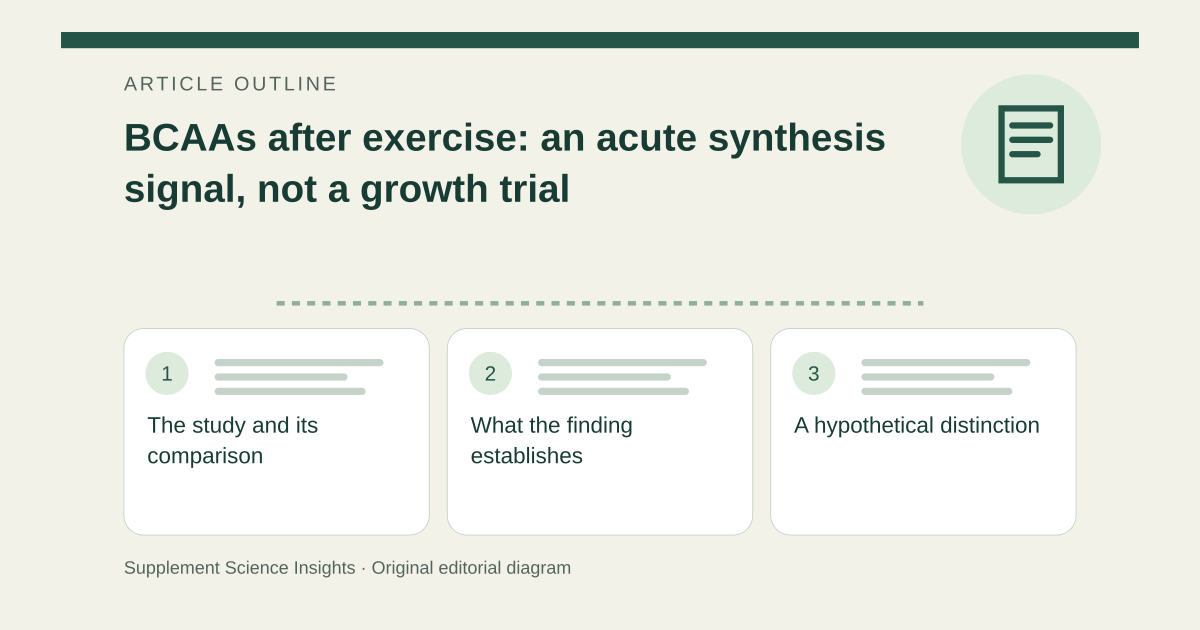
The study and its comparison
Ten resistance-trained young men took 5.6 grams of branched-chain amino acids or placebo after exercise in an acute study. Researchers used tracer and biopsy measurements over four hours. [1]
Myofibrillar protein synthesis was about 22 percent higher after BCAAs. The experiment did not include a complete-protein comparison or months of training outcomes. [1]
What the finding establishes
An acute synthesis response is not a direct measurement of eventual hypertrophy, optimal timing or superiority to food. GlaxoSmithKline Healthcare provided a research grant; the authors declared no commercial relationships that could be construed as conflicts. [1]
A hypothetical distinction
Imagine a four-hour biological response is measured. It cannot be converted directly into a prediction of kilograms of muscle gained.
| Detail | Interpretation |
|---|---|
| Measured outcome | Keep the endpoint specific |
| Study preparation | Not every retail product |
| Remaining uncertainty | Not resolved by a mechanism |
Sources for this article
- Branched-Chain Amino Acid Ingestion Stimulates Muscle Myofibrillar Protein Synthesis following Resistance Exercise in Humans - PMC
Source consulted: 2026-09-19. This is a reference resource, not a claim that we conducted the studies or tested a product.