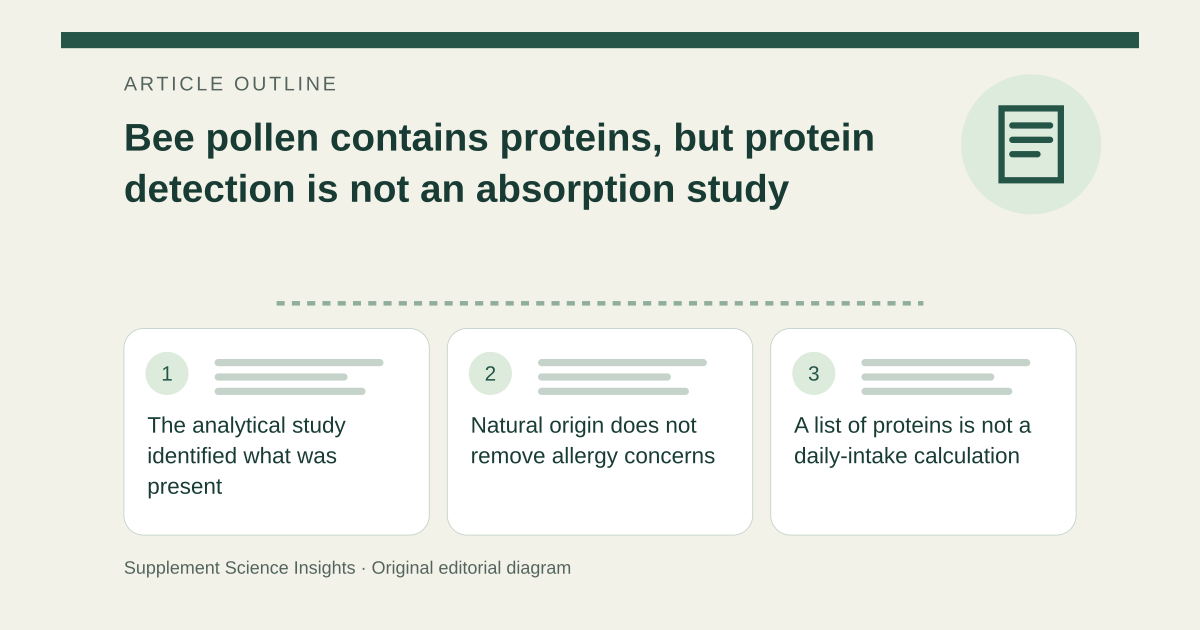
The analytical study identified what was present
Researchers analyzed prepared aqueous bee-pollen extracts using mass spectrometry and identified plant-derived and bee-derived proteins. The study was designed to characterize composition, particularly potential allergens. [1]
Detecting a protein in an extract is different from measuring its amount in a retail serving, human digestibility or a clinical nutritional benefit. [1]
Natural origin does not remove allergy concerns
The investigators identified potential plant allergens and called for better standardization of bee pollen intended for consumption. Their composition results do not establish that an individual with pollen allergy can consume it safely. [1]
Do not treat protein content as a reason to test a known allergy by eating pollen. A nutrition comparison would also need reliable serving amounts, amino acid availability and a relevant alternative food. [1]
A list of proteins is not a daily-intake calculation
Imagine a product advertisement cites dozens of identified proteins. The number of distinct proteins does not tell you the grams of usable protein in one teaspoon.
| Detail | Interpretation |
|---|---|
| Protein identification | Composition evidence |
| Human absorption | Separate measurement |
| Potential allergens | Important safety distinction |
Sources for this article
- Mass Spectrometry-Based Identification of Bioactive Bee Pollen Proteins: Evaluation of Allergy Risk after Bee Pollen Supplementation - PMC
Source consulted: 2026-09-18. This is a reference resource, not a claim that we conducted the studies or tested a product.