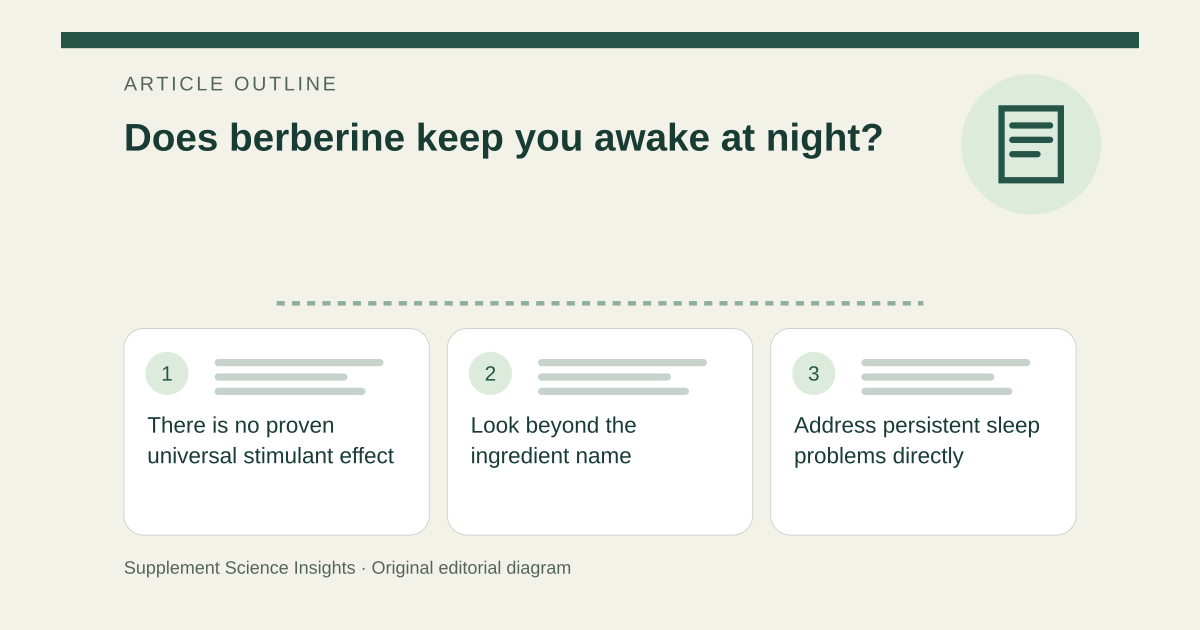
There is no proven universal stimulant effect
NCCIH primarily reports gastrointestinal adverse effects and medicine interactions. Its summary does not establish that berberine routinely acts like caffeine or that everyone should avoid an evening dose. It also does not exclude an individual reaction or effects from other ingredients. [1]
Look beyond the ingredient name
Record when the sleep problem began, the whole formula, caffeine or alcohol intake, medicines and changes in routine. NHS guidance identifies stress, stimulants, pain, thyroid conditions and medicines among possible contributors to insomnia. A product advertised for metabolism may contain more than berberine. [2][1]
Address persistent sleep problems directly
Discuss a suspected supplement reaction and whether to stop the nonessential product. A consistent wake time and a suitable sleep environment can help, but continuing insomnia affecting daily life warrants assessment; CBT is an established option. Adding another supplement can obscure the cause and introduces another exposure. [2][1]
One bad night cannot identify the cause
Imagine a person begins a berberine blend during a stressful week and also increases coffee. A brief diary can make those changes visible. It cannot prove causality, but it gives a clinician or pharmacist a better starting point than assuming the herb is either always stimulating or always harmless. [2]
| Detail | Reason to record it |
|---|---|
| Start date and dose time | Temporal relationship |
| Full blend and caffeine | Other potential contributors |
| Night symptoms and daytime impact | Severity and assessment needs |
| Persistent insomnia | Consider cause-specific care |
Sources for this article
- Berberine and Weight Loss: What You Need To Know | NCCIH
Source consulted: 2026-09-21. This is a reference resource, not a claim that we conducted the studies or tested a product. - Insomnia - NHS
Source consulted: 2026-09-21. This is a reference resource, not a claim that we conducted the studies or tested a product.