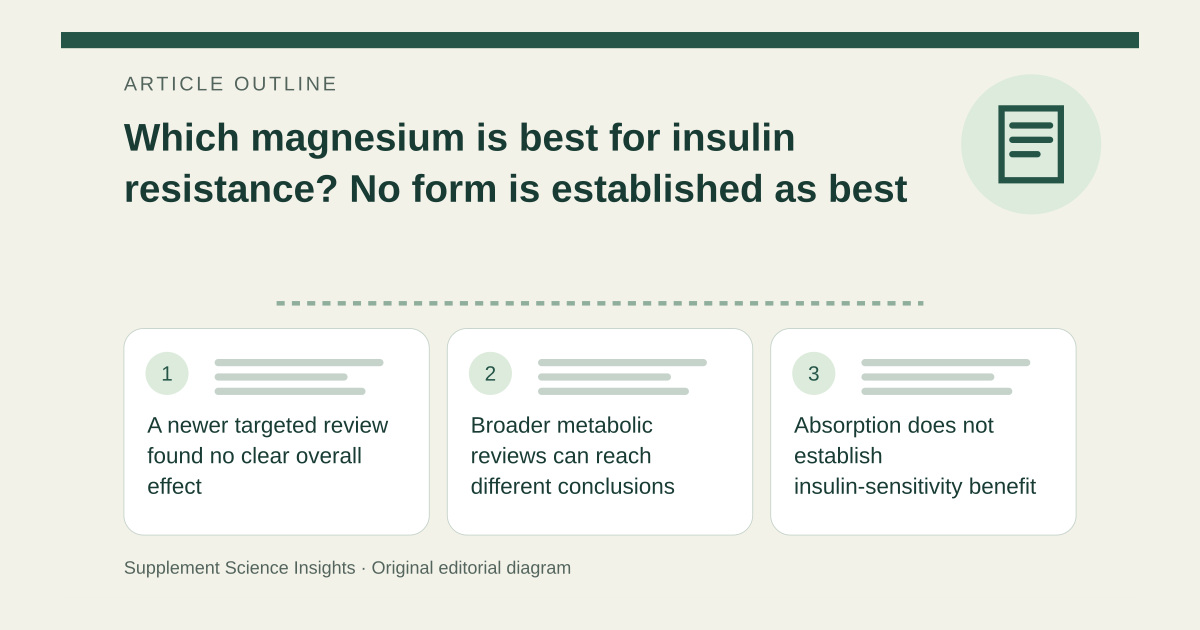
A newer targeted review found no clear overall effect
A July 2026 systematic review abstract summarized 15 randomized trials in people with diabetes or prediabetes. Overall changes in insulin and HOMA-IR did not reach statistical significance. The authors explored possible differences by baseline insulin resistance, but that does not identify a proven best supplement for an individual. [1]
Broader metabolic reviews can reach different conclusions
A separate broad cardiometabolic meta-analysis reported favorable findings for some glucose-related endpoints across mixed populations and protocols. Different outcomes and included studies can produce different pooled results. Neither review provides a direct head-to-head ranking of glycinate, citrate and every other commercial salt. [2][1]
Absorption does not establish insulin-sensitivity benefit
NIH describes differences in absorption among magnesium forms. That does not show that the most absorbed product produces the largest improvement in insulin resistance. Baseline status, dose, adherence, population and the outcome measured all affect interpretation. [3]
Retain the actual diabetes or prediabetes plan
NCCIH cautions against replacing established diabetes treatment with supplements. Discuss suspected deficiency and the complete formula with the care team, especially with kidney disease or other medicines. A product marketed for blood sugar may contain additional active ingredients. [4][3]
Avoid choosing from an unsupported ranking
Imagine two brands claim to be best because one uses glycinate and another uses citrate. Without comparative clinical outcomes, those labels do not settle the insulin-resistance question. Assess the reason for magnesium and track the clinician-selected metabolic measures while continuing the agreed treatment plan. [1][4]
| Claim | Evidence still needed |
|---|---|
| More readily absorbed | Better insulin-resistance outcome |
| Improved fasting glucose | Not identical to every insulin measure |
| Best salt | Direct comparative clinical evidence |
| Low magnesium status | Individual assessment and replacement rationale |
Sources for this article
- Oral magnesium supplements and insulin resistance in individuals with diabetes and pre-diabetes: an updated systematic review and meta-analysis of randomized controlled trials.
Source consulted: 2026-09-21. This is a reference resource, not a claim that we conducted the studies or tested a product. - Comprehensive Effects of Magnesium Supplementation on Cardiometabolic Risk Factors: A Systematic Review and Dose–Response Meta-Analysis - PMC
Source consulted: 2026-09-21. This is a reference resource, not a claim that we conducted the studies or tested a product. - Magnesium - Health Professional Fact Sheet
Source consulted: 2026-09-21. This is a reference resource, not a claim that we conducted the studies or tested a product. - Diabetes and Dietary Supplements: What You Need To Know | NCCIH
Source consulted: 2026-09-21. This is a reference resource, not a claim that we conducted the studies or tested a product.