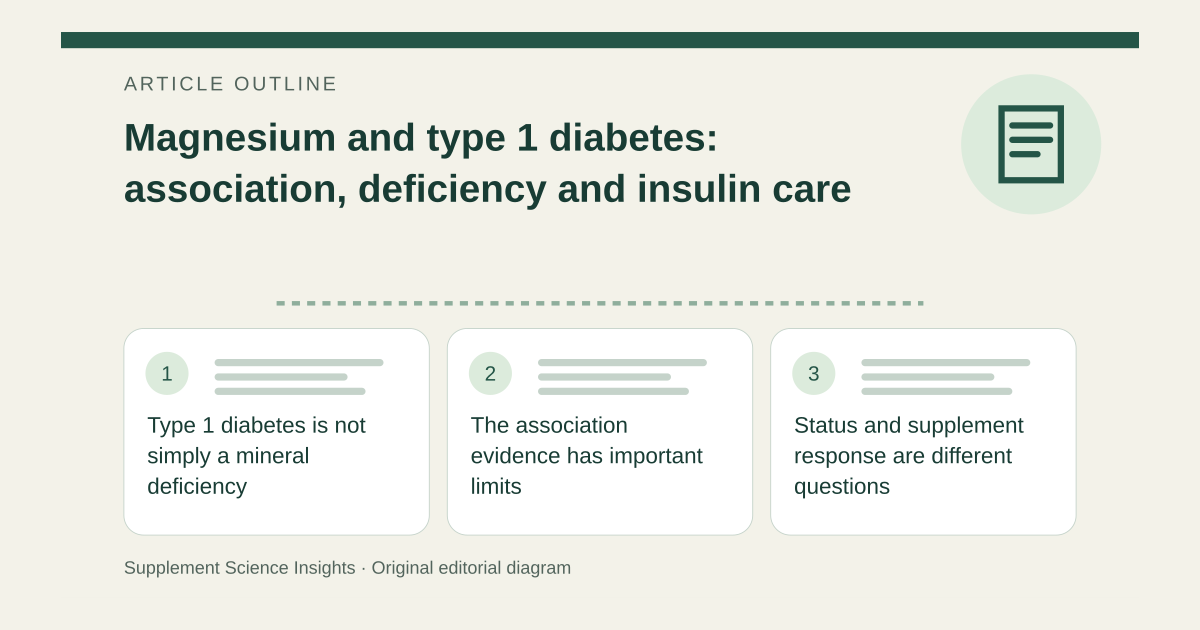
Type 1 diabetes is not simply a mineral deficiency
NIDDK describes type 1 diabetes as an autoimmune disease in which the body makes little or no insulin. Management includes insulin and glucose monitoring. Research about insulin resistance or type 2 diabetes cannot automatically answer a type 1 treatment question. [1]
The association evidence has important limits
A 2020 systematic review included nine cross-sectional studies, with only two contributing to its meta-analysis. Lower serum magnesium was associated with poorer glycemic control in several studies, while complication findings were inconsistent. Cross-sectional results cannot determine whether low magnesium caused the problem or followed it. [2]
Status and supplement response are different questions
A blood-level association does not establish the effect of giving a supplement. Intake, losses, kidney function and other health factors should be considered. Serum magnesium is useful in clinical assessment but does not fully describe total body stores. [3][2]
Use an individualized deficiency assessment
Discuss suspected low intake, persistent digestive losses or an abnormal result with the diabetes team. Supplement suitability and dose depend on the problem and kidney function. Do not change insulin because a product claims to support magnesium balance or blood sugar. [3][1]
Follow the outcome that matters
Imagine a person has both elevated glucose readings and a low magnesium result. The team may address both, but an improvement during several simultaneous changes cannot identify magnesium as the cause. Continue the prescribed monitoring and insulin plan while nutritional issues are assessed. [1][2]
| Observation | Appropriate distinction |
|---|---|
| Lower magnesium and higher glucose | Association, not proven causation |
| Type 2 supplement study | Not automatically type 1 evidence |
| Documented deficiency | Separate replacement indication |
| Magnesium supplement | Does not replace insulin |
Sources for this article
- Type 1 Diabetes - NIDDK
Source consulted: 2026-09-21. This is a reference resource, not a claim that we conducted the studies or tested a product. - Association between reduced serum levels of magnesium and the presence of poor glycemic control and complications in type 1 diabetes mellitus: A systematic review and meta-analysis.
Source consulted: 2026-09-21. This is a reference resource, not a claim that we conducted the studies or tested a product. - Magnesium - Health Professional Fact Sheet
Source consulted: 2026-09-21. This is a reference resource, not a claim that we conducted the studies or tested a product.