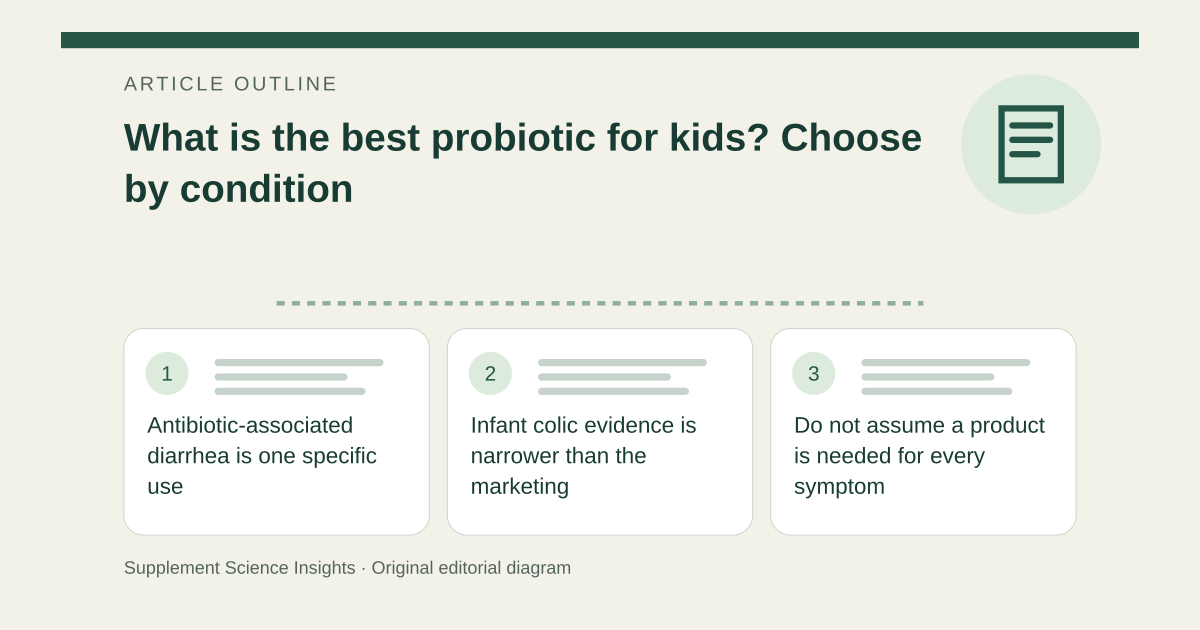
Antibiotic-associated diarrhea is one specific use
ODS and ISAPP identify evidence for selected preparations, including Lactobacillus rhamnosus GG and Saccharomyces boulardii, in appropriate pediatric settings. A clinician should match the preparation and amount to the child and evidence. Different species or mixtures cannot automatically substitute. [1][2]
Infant colic evidence is narrower than the marketing
NCCIH describes findings for L. reuteri DSM 17938 primarily in exclusively breastfed infants. That does not establish the same benefit for every formula-fed infant, another strain or any unexplained crying. Feeding, growth and illness concerns require pediatric assessment. [3]
Do not assume a product is needed for every symptom
Evidence varies across constipation, abdominal pain, eczema and other proposed uses. A broad children’s gut-health claim does not establish a useful dose or duration. Discuss the symptom and expected outcome rather than buying the product with the most strains. [1][3]
Prematurity and illness change the decision
NCCIH warns about serious infections in premature infants, and live products require caution with severe illness or impaired immunity. Imagine using half an adult capsule for a young child: dividing the amount does not establish age-appropriate safety or efficacy. Use a pediatric plan for the exact product. [3][2]
| Context | Key limitation |
|---|---|
| Antibiotic-related diarrhea | Strain and dose must match evidence |
| Infant colic | Feeding context and strain matter |
| General wellness | No universal daily requirement |
| Premature or vulnerable infant | Specialist safety decision |
Sources for this article
- Probiotics - Health Professional Fact Sheet
Source consulted: 2026-09-21. This is a reference resource, not a claim that we conducted the studies or tested a product. - Probiotic use alongside antibiotics: A guide to clinical FAQs
Source consulted: 2026-09-21. This is a reference resource, not a claim that we conducted the studies or tested a product. - Probiotics: Usefulness and Safety | NCCIH
Source consulted: 2026-09-21. This is a reference resource, not a claim that we conducted the studies or tested a product.