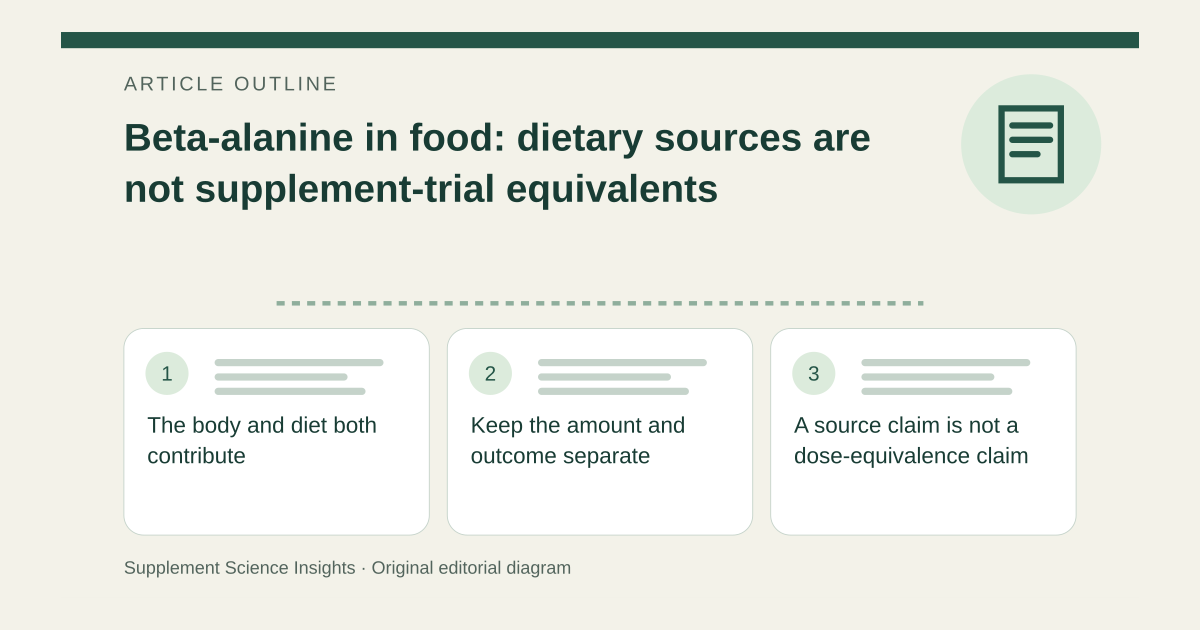
The body and diet both contribute
NIH ODS identifies meat, poultry and fish as dietary sources and notes production in the liver. Carnosine, a dipeptide containing beta-alanine and histidine, is also present in animal foods. [1]
Carnosine consumed orally is broken down into its component amino acids. Eating it should not be described as directly transporting an unchanged dose into muscle. [1]
Keep the amount and outcome separate
Supplement studies use specified beta-alanine exposures over defined periods, and the resulting change in muscle carnosine varies. A food-source list does not provide that same intervention. [1]
A normal biochemical role also does not establish that everyone needs a beta-alanine supplement. Assess the actual exercise goal and evidence rather than assuming that more precursor necessarily produces a useful performance result. [1]
A source claim is not a dose-equivalence claim
Imagine a food is described as containing carnosine. That fact alone does not show that one serving reproduces the muscle-carnosine change observed after a measured supplement regimen.
| Detail | Interpretation |
|---|---|
| Food source | Contributes dietary compounds |
| Carnosine | Digested into components |
| Trial exposure | Needs an explicit amount and duration |
Sources for this article
- Dietary Supplements for Exercise and Athletic Performance - Health Professional Fact Sheet
Source consulted: 2026-09-17. This is a reference resource, not a claim that we conducted the studies or tested a product.