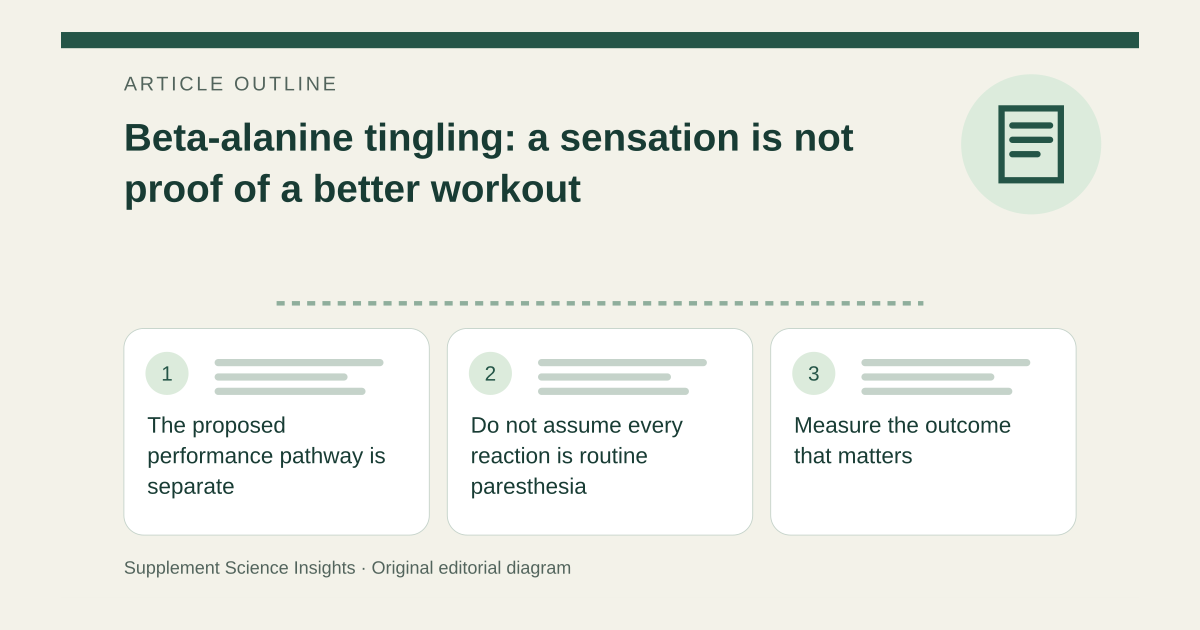
The proposed performance pathway is separate
ODS describes beta-alanine as a precursor for muscle carnosine, which helps buffer changes in muscle acidity during intense activity. Studies of performance vary in their populations, protocols and findings. [1]
Tingling is a reported effect of taking beta-alanine, not a direct measurement of that buffering process. Feeling more of it does not establish a larger performance benefit, and its absence does not show that a preparation lacks the ingredient. [1]
Do not assume every reaction is routine paresthesia
ODS describes transient prickling or burning sensations and notes that divided doses or sustained-release forms can reduce them. This does not establish a reason to increase intake until the sensation appears. [1]
A multi-ingredient pre-workout can cause other effects as well. Severe, persistent or unexpected symptoms should not be dismissed as normal beta-alanine tingling; the complete product and exposure need assessment. Long-term safety cannot be inferred from one uneventful dose. [1]
Measure the outcome that matters
Imagine two workouts feel different because one product causes stronger tingling. Without comparable performance measurements, that sensation cannot establish improved strength or endurance. It is an experience to document, not an efficacy test.
| Detail | Implication |
|---|---|
| Paresthesia | A reported sensation |
| Carnosine | Separate physiological measure |
| Workout benefit | Requires performance evidence |
Sources for this article
- NIH ODS: Dietary Supplements for Exercise and Athletic Performance
Source consulted: 2026-09-17. This is a reference resource, not a claim that we conducted the studies or tested a product.