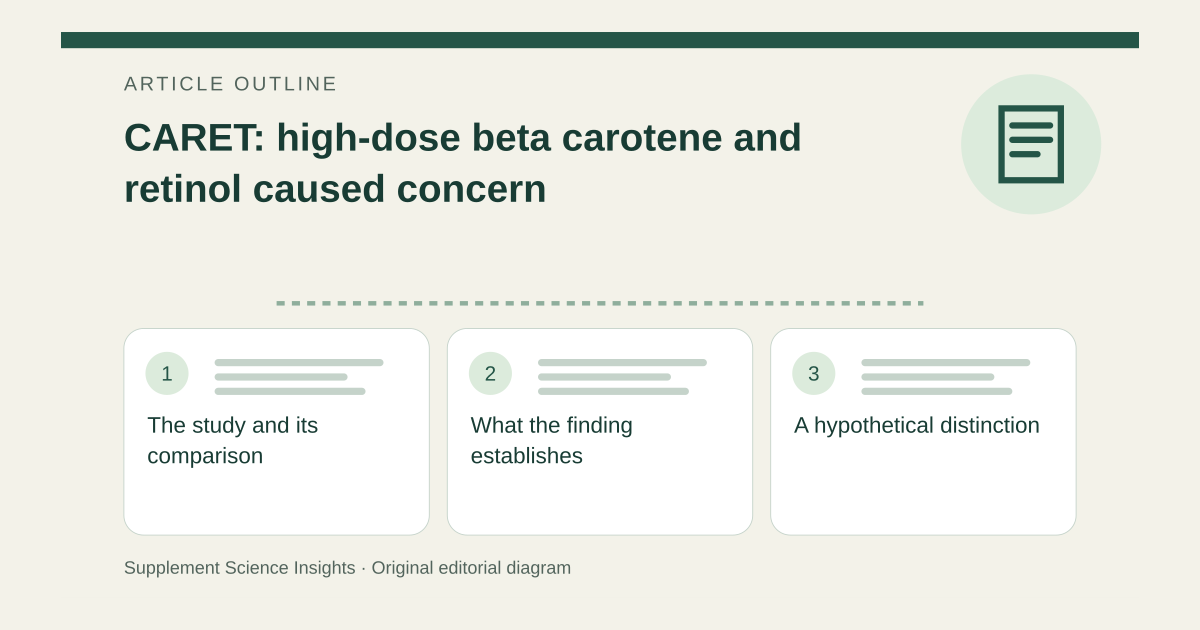
The study and its comparison
A randomized controlled trial enrolled 18,314 participants. Its population was smokers, former smokers and asbestos-exposed workers. The comparison used beta carotene 30 mg plus retinyl palmitate 25000 iu daily versus placebo, with observation over average four years. [1]
Lung-cancer risk was higher with the combination: relative risk 1.28, with a 95% confidence interval of 1.04 to 1.57. All-cause mortality was also higher, and the trial stopped twenty-one months early. [1]
What the finding establishes
The combined high-dose preparation prevents attribution to either ingredient alone. These findings concern a high-risk population and cannot be transferred directly to the amounts used in ordinary fortified milk. Nevertheless, an antioxidant mechanism did not predict clinical safety or protection. Funding and complete conflicts were not established from the retrieved abstract. [1]
A hypothetical distinction
Imagine an antioxidant combination raises cancer risk in a randomized trial. The clinical result takes priority over a protective laboratory rationale.
| Detail | Interpretation |
|---|---|
| Measured outcome | Keep the endpoint specific |
| Study preparation | Not every retail product |
| Remaining uncertainty | Not resolved by a mechanism |
Sources for this article
- Effects of a combination of beta carotene and vitamin A on lung cancer and cardiovascular disease.
Source consulted: 2026-09-19. This is a reference resource, not a claim that we conducted the studies or tested a product.