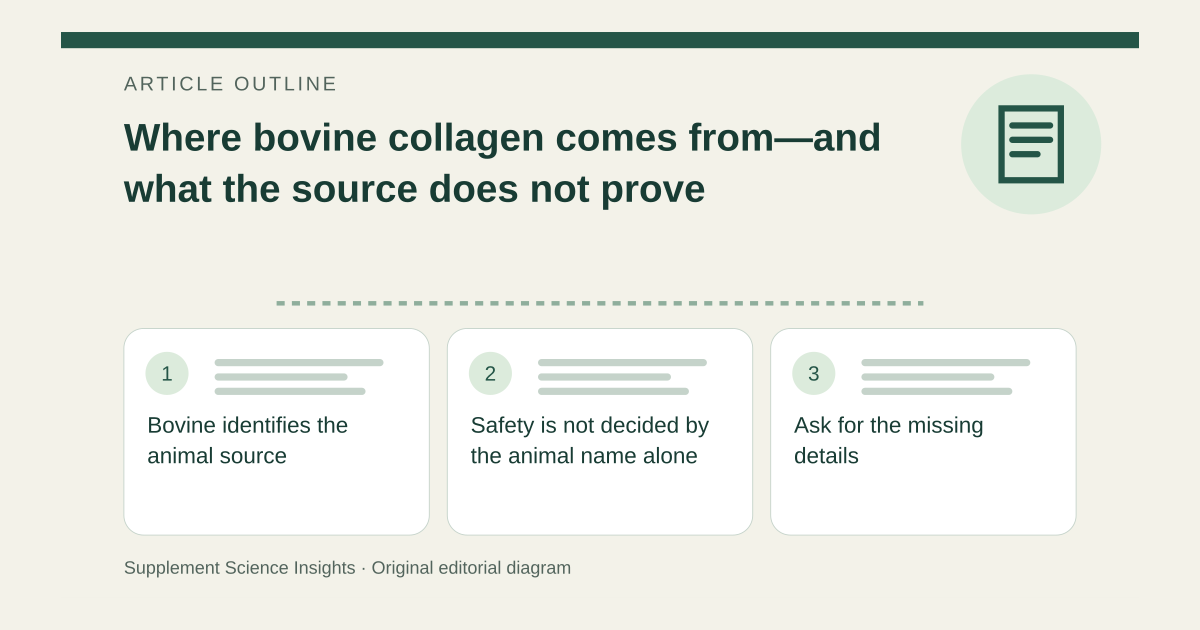
Bovine identifies the animal source
Collagen can be extracted from connective tissues and processed into native forms, gelatin or hydrolysates. A bovine label distinguishes cattle-derived material from fish, pig or other sources, but does not by itself specify the exact tissue, manufacturing method or peptide profile. [1]
Safety is not decided by the animal name alone
The finished product needs appropriate identity, composition and contamination controls. Dietary restrictions and individual reactions also matter. A source label is therefore useful information rather than a universal declaration of either danger or safety. The cited manufacturing review is descriptive and has industry affiliations; it is not a certification of a retail batch. [1][2]
Ask for the missing details
Imagine a product says bovine collagen but does not identify other ingredients or provide sourcing clarification relevant to a dietary requirement. Ask the manufacturer about the exact formulation and documentation. Do not infer religious certification, a clinical benefit or contaminant-free status from the word bovine alone. [2]
| Comparison | Distinction |
|---|---|
| Bovine | Cattle-derived source |
| Hydrolyzed | Processing description |
| Quality documentation | A separate finished-product question |
Sources for this article
- Collagen Supplementation for Joint Health: The Link between Composition and Scientific Knowledge - PMC
Source consulted: 2026-09-20. This is a reference resource, not a claim that we conducted the studies or tested a product. - Questions and Answers on Dietary Supplements | FDA
Source consulted: 2026-09-20. This is a reference resource, not a claim that we conducted the studies or tested a product.