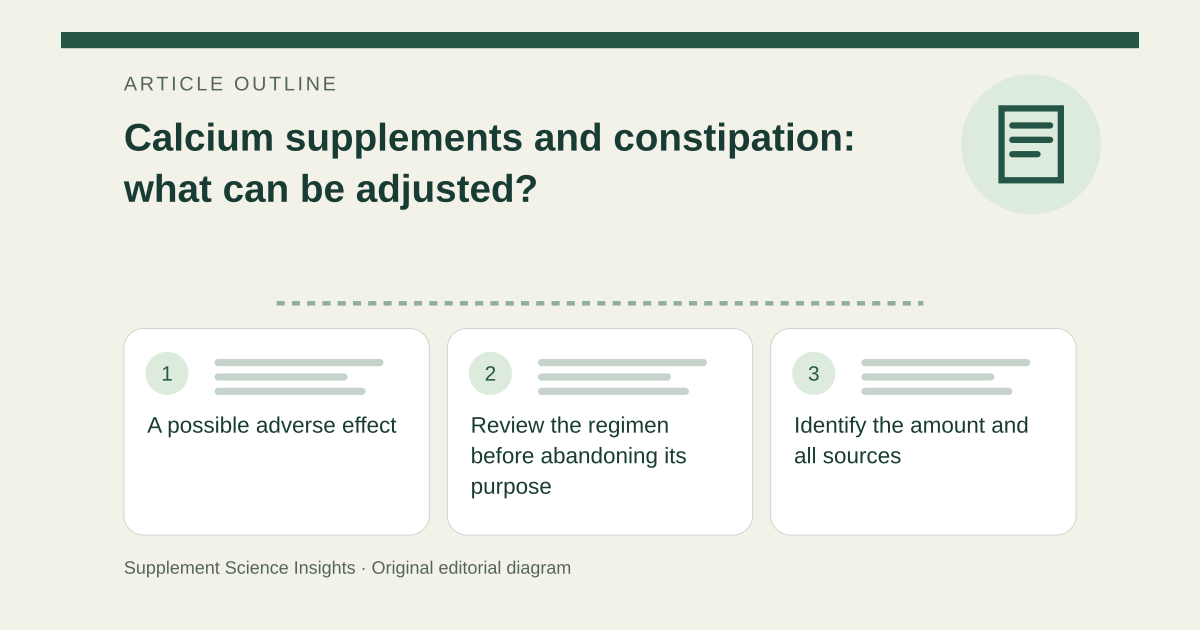
A possible adverse effect
Constipation is a recognized gastrointestinal adverse effect of calcium supplements. Some people also experience gas or bloating. A symptom that begins after starting a product is a reason to review it, but timing alone does not prove calcium is the only cause. [1]
ODS reports that calcium carbonate appears more likely to cause these effects than calcium citrate, particularly in older adults with lower stomach acid. That is a general comparison, not a guarantee that another form will suit everyone. [1]
Review the regimen before abandoning its purpose
ODS describes changing the calcium form, taking smaller amounts more often or taking the supplement with meals as ways symptoms may be reduced. Whether one of these is appropriate depends on the intended regimen and any medicine instructions. [1]
Calcium citrate is less dependent on stomach acid than carbonate. Carbonate may be better absorbed with a meal, especially when stomach acid is low. A tolerability change should account for absorption as well as convenience. [1]
Identify the amount and all sources
Imagine someone takes a calcium supplement and frequently uses a calcium-containing antacid. They report the supplement alone when asking about constipation. Bringing both labels reveals an additional exposure that otherwise would be missed.
The useful record includes elemental calcium per serving, servings used, timing and symptom changes. It does not establish that the person should simply switch to the largest citrate tablet available.
| Observation | Interpretation |
|---|---|
| Supplement | Record elemental calcium and servings |
| Antacid | Include calcium from medicine use |
| New constipation | Review timing and other causes |
Persistent symptoms deserve assessment
An upper intake limit is not a target and does not mean every amount below it will be free of constipation. Calcium requirements and upper limits also vary by age. Review total intake rather than judging a product by its front-label strength alone. [1]
Persistent or worsening symptoms should be discussed with a clinician. Calcium can also interact with medicines, including levothyroxine and some antibiotics, so a pharmacist should check the exact schedule before a regimen is changed. [1]
Sources for this article
- NIH ODS — Calcium: Health Professional Fact Sheet
Source consulted: 2026-09-17. This is a reference resource, not a claim that we conducted the studies or tested a product.