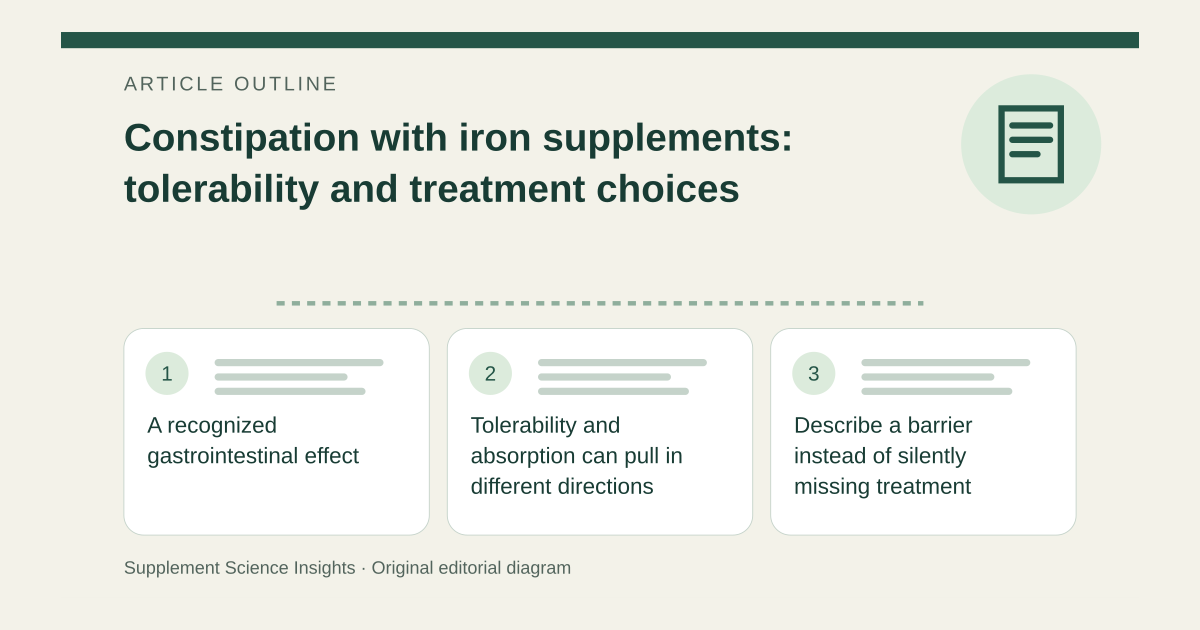
A recognized gastrointestinal effect
Oral iron can cause constipation, nausea, abdominal discomfort or diarrhea. NIH ODS and MedlinePlus describe these as recognized gastrointestinal adverse effects, particularly with higher supplemental amounts. Constipation does not demonstrate that all the iron was absorbed or that treatment is especially effective. [1][2]
The symptom also does not establish that iron is the only cause. Record when it began, the preparation and actual use, and any other relevant changes. The source summaries identify the adverse effect; they do not provide one proven molecular explanation for every case. [1][2]
Tolerability and absorption can pull in different directions
Iron is often better absorbed on an empty stomach, but taking it with a small amount of food can reduce gastrointestinal symptoms. This creates a practical balance between absorption and a regimen that can actually be followed. The prescriber can advise how to handle that balance for the intended treatment. [1][3]
MedlinePlus advises asking about another form of iron rather than simply stopping. A different preparation, amount or schedule is a treatment decision, not proof that one retail form is universally free of side effects. [1][3]
Describe a barrier instead of silently missing treatment
Imagine someone prescribed iron begins skipping most doses because of constipation. A record showing the prescribed regimen, doses actually taken and bowel symptoms gives the clinician a reason to adjust the plan. Reporting only that the blood result did not improve would hide an important explanation.
This example does not recommend a laxative or a new iron schedule. Those choices depend on the symptoms, other medicines and reason for treatment.
| Record | Why it matters |
|---|---|
| Prescribed preparation and amount | Defines the intended regimen |
| Doses actually taken | Reveals missed treatment |
| Symptoms and stool changes | Guides review and identifies warning signs |
Do not dismiss concerning stool changes
Iron can darken stools. MedlinePlus distinguishes this expected change from black stools that also look tarry, red streaks, or associated sharp abdominal pain, which require prompt advice. Do not automatically attribute possible bleeding to a harmless color change. [1]
Persisting or severe symptoms deserve review. Keeping the deficiency untreated is not a satisfactory solution to poor tolerability, but neither is repeatedly increasing iron while ignoring adverse effects. [1]
Keep the cause of the deficiency in view
The NHS emphasizes finding and treating why iron-deficiency anemia occurred, including blood loss when present. A more tolerable tablet does not correct an ongoing source of bleeding. Discuss both symptom control and the underlying treatment goal at follow-up. [3]
Sources for this article
- MedlinePlus — Taking iron supplements
Source consulted: 2026-09-17. This is a reference resource, not a claim that we conducted the studies or tested a product. - NIH ODS — Iron: Health Professional Fact Sheet
Source consulted: 2026-09-17. This is a reference resource, not a claim that we conducted the studies or tested a product. - NHS — Iron deficiency anaemia
Source consulted: 2026-09-17. This is a reference resource, not a claim that we conducted the studies or tested a product.