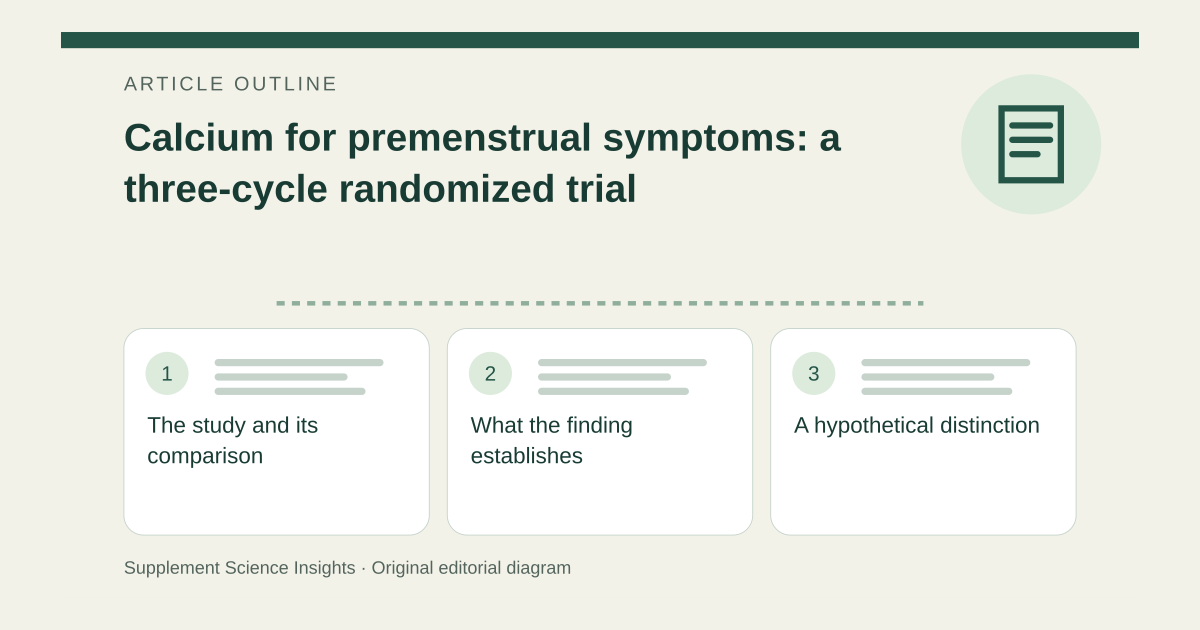
The study and its comparison
A multicenter blinded trial enrolled 497 women with moderate-to-severe recurring premenstrual symptoms; 466 were included in the efficacy analysis. Daily symptom tracking preceded randomization to calcium carbonate or placebo. [1]
By the third treatment cycle, symptom scores had fallen about forty-eight percent from baseline with calcium and thirty percent with placebo. Between-group differences favored calcium during the second and third cycles. [1]
What the finding establishes
Those percentages describe score reductions, not the proportion cured. The difference between enrolled and analyzed participants and the short follow-up matter. Funding and conflicts were not established from the abstract. A research amount of 1,200 milligrams of elemental calcium is not a universal instruction to add that amount on top of every diet. [1]
A hypothetical distinction
Imagine symptoms improve in both groups. The relevant estimate compares their improvement rather than attributing the full active-group reduction to treatment.
| Detail | Interpretation |
|---|---|
| Measured outcome | Keep the endpoint specific |
| Study preparation | Not every retail product |
| Remaining uncertainty | Not resolved by a mechanism |
Sources for this article
- Calcium carbonate and the premenstrual syndrome: effects on premenstrual and menstrual symptoms. Premenstrual Syndrome Study Group.
Source consulted: 2026-09-19. This is a reference resource, not a claim that we conducted the studies or tested a product.