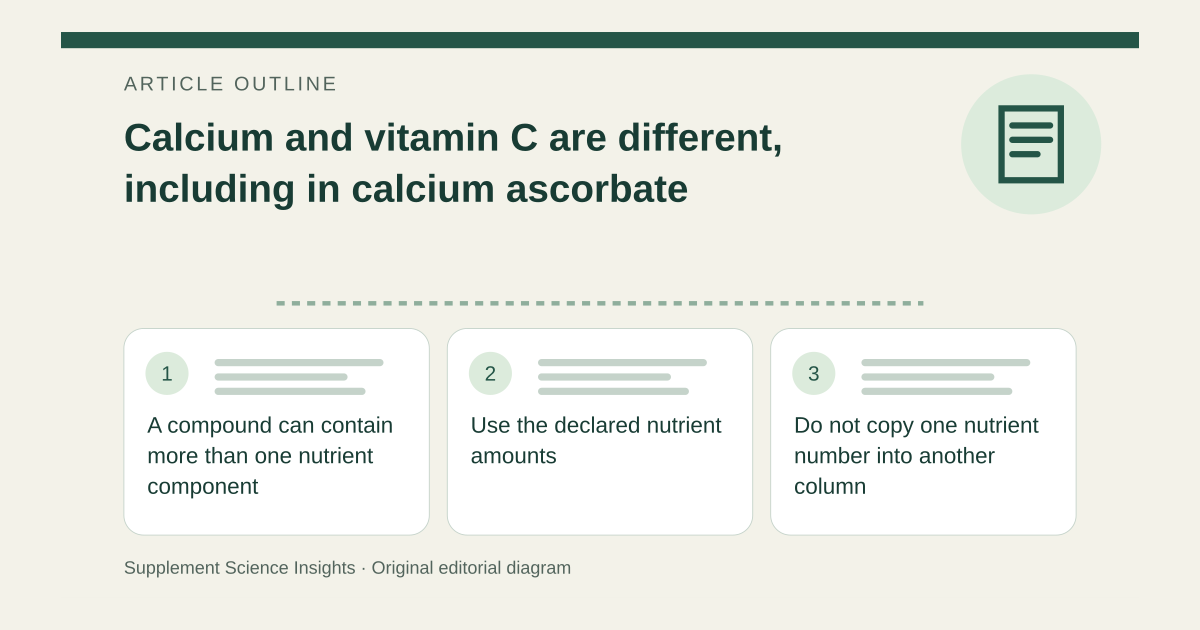
A compound can contain more than one nutrient component
NIH ODS lists calcium ascorbate among supplemental vitamin C forms. Calcium still has its own mineral functions, including roles in bones, muscles and nerves. [1][2]
The vitamin C amount declared for an ingredient should not be read as an equal calcium amount. The two nutrients have different quantities and separate nutritional references. [1][2]
Use the declared nutrient amounts
Read each relevant entry on the product label rather than converting the front-label compound name into an assumed dose. A vitamin C product is not automatically a substitute for an intended calcium source. [1][2]
Likewise, ordinary calcium supplementation does not fulfill vitamin C requirements. Similar packaging or shared bone-health language does not change those identities. [1][2]
Do not copy one nutrient number into another column
Imagine a label lists 500 mg vitamin C from calcium ascorbate. That does not state that the serving contains 500 mg calcium; the actual calcium declaration must be checked.
| Detail | Interpretation |
|---|---|
| Vitamin C | Vitamin quantity |
| Calcium | Separate mineral quantity |
| Calcium ascorbate | Shared compound, not equal amounts |
Sources for this article
- Vitamin C - Health Professional Fact Sheet
Source consulted: 2026-09-18. This is a reference resource, not a claim that we conducted the studies or tested a product. - Calcium - Health Professional Fact Sheet
Source consulted: 2026-09-18. This is a reference resource, not a claim that we conducted the studies or tested a product.