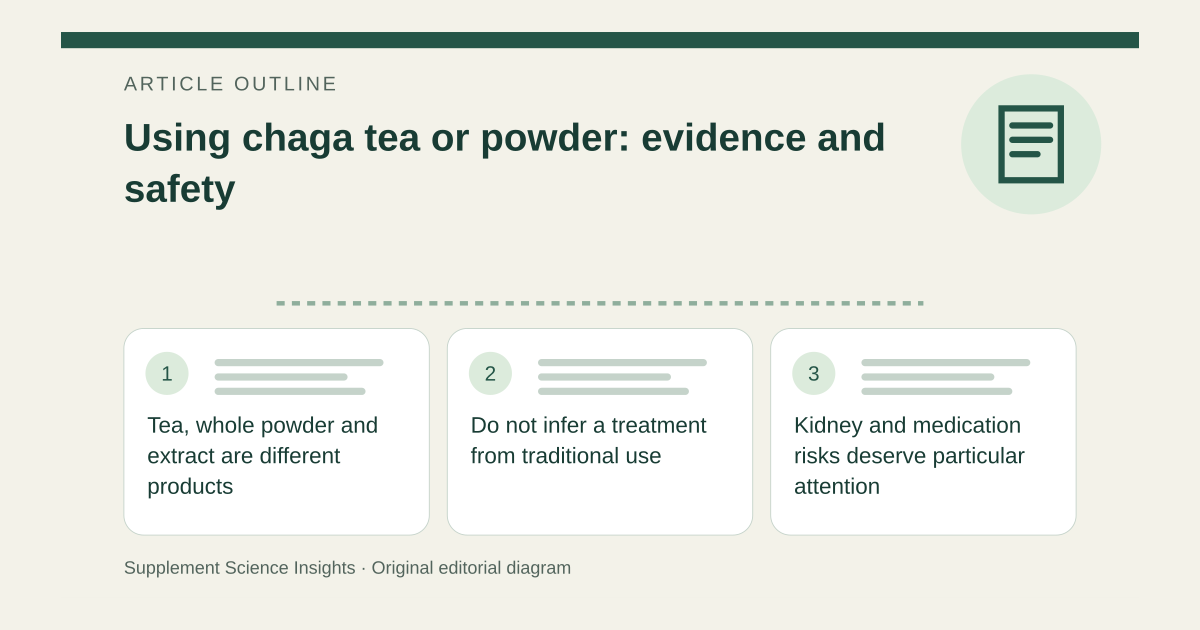
Tea, whole powder and extract are different products
A tea uses water to obtain a mixture from the material; swallowing whole powder includes components that may remain behind in a filtered infusion. A concentrated extract is different again. Follow the specific product’s instructions rather than translating teaspoons between forms. [1][2]
Do not infer a treatment from traditional use
MSK describes laboratory and animal findings but states that clinical safety and efficacy have not been established. Chaga should not replace treatment for cancer, diabetes, inflammatory disease or fatigue. A dark or bitter brew does not reveal its effective dose. [1]
Kidney and medication risks deserve particular attention
MSK reports oxalate-related kidney injury associated with chaga use. The reported amounts do not define a safe threshold below them. Potential interactions involving blood glucose and bleeding are also concerns, although much interaction evidence is preclinical. People with kidney disease should discuss use with their clinician. [1]
Keep preparation separate from a health claim
Imagine a package offers both tea pieces and powder. Choosing a form for convenience does not resolve the evidence or safety gap, and using more is not a reliable way to obtain a benefit. Confirm identity and quality and avoid combining it with medicines without advice. [1][3]
| Form | Do not assume |
|---|---|
| Filtered tea | Proven safe treatment |
| Whole powder | Equivalent to tea |
| Extract | Same strength as powder |
| Higher amount | Greater benefit |
Sources for this article
- Chaga Mushroom | Memorial Sloan Kettering Cancer Center
Source consulted: 2026-09-21. This is a reference resource, not a claim that we conducted the studies or tested a product. - A Review of Development and Utilization for Edible Fungal Polysaccharides: Extraction, Chemical Characteristics, and Bioactivities - PMC
Source consulted: 2026-09-21. This is a reference resource, not a claim that we conducted the studies or tested a product. - Dietary Supplements: What You Need to Know
Source consulted: 2026-09-21. This is a reference resource, not a claim that we conducted the studies or tested a product.