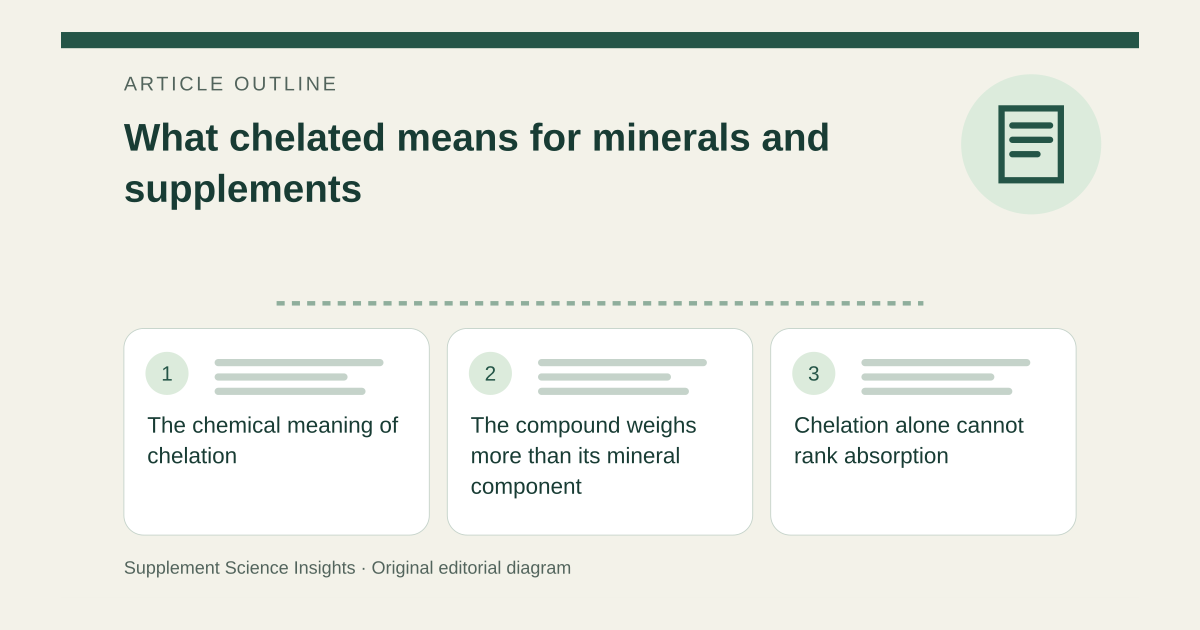
The chemical meaning of chelation
A mineral chelate contains a central atom, often a metal, bound at two or more sites by the same ligand. A ligand is a molecule or ion that provides those binding sites. The key idea is more than one attachment from a single ligand, rather than simply the presence of a mineral beside another ingredient. [1]
This is the IUPAC definition of chelation. It helps distinguish a chemical description from a marketing promise. A label that says “chelated” still needs to identify the mineral and the compound or ligand involved. Different chelates are not one interchangeable ingredient category. [1]
The compound weighs more than its mineral component
A mineral compound includes the mineral plus its associated chemical components. The mass of the whole compound therefore differs from the amount of elemental mineral it supplies. NIH explains this distinction for magnesium supplement labels: the declared magnesium amount represents elemental magnesium, rather than the weight of the entire magnesium-containing compound. [2]
When comparing products, look for the nutrient amount per serving and the number of capsules or measures in that serving. Do not compare a compound weight on one label with an elemental amount on another as though they were the same measurement. A larger compound number can coexist with a smaller nutrient amount. [2]
Chelation alone cannot rank absorption
Chemical form can affect absorption, but the word chelated does not provide a measured percentage. NIH discusses differences among particular mineral forms rather than endorsing one blanket rule for all chelates. An absorption comparison needs the exact forms, comparable elemental amounts and a relevant study method. [2][3]
Even a demonstrated difference in absorption is a separate question from whether supplementation improves a symptom or clinical outcome. Someone comparing iron, zinc and magnesium products also faces different nutrient requirements and safety considerations. A result for one mineral and ligand should not be transferred to all of them. [2][3]
Comparing a hypothetical compound claim
Suppose the front of a bottle advertises 500 mg of a chelated compound, while the nutrient panel declares 50 mg of the elemental mineral per serving. The nutrient amount is 50 mg, not 500 mg. This illustration does not describe the composition of any particular chelate. To interpret a real product, use its exact ingredient identity, declared elemental amount and serving instructions; do not derive the missing amount from the word “chelated.” [2][1]
| Label statement | Interpretation |
|---|---|
| 500 mg of a compound | Includes the mineral and associated chemical components |
| 50 mg elemental mineral per serving | The declared mineral contribution in this example |
| Chelated | Describes binding; supplies no universal absorption percentage |
Sources for this article
- IUPAC - chelation (C01012)
Source consulted: 2026-09-20. This is a reference resource, not a claim that we conducted the studies or tested a product. - Magnesium - Health Professional Fact Sheet
Source consulted: 2026-09-20. This is a reference resource, not a claim that we conducted the studies or tested a product. - Zinc - Health Professional Fact Sheet
Source consulted: 2026-09-20. This is a reference resource, not a claim that we conducted the studies or tested a product.