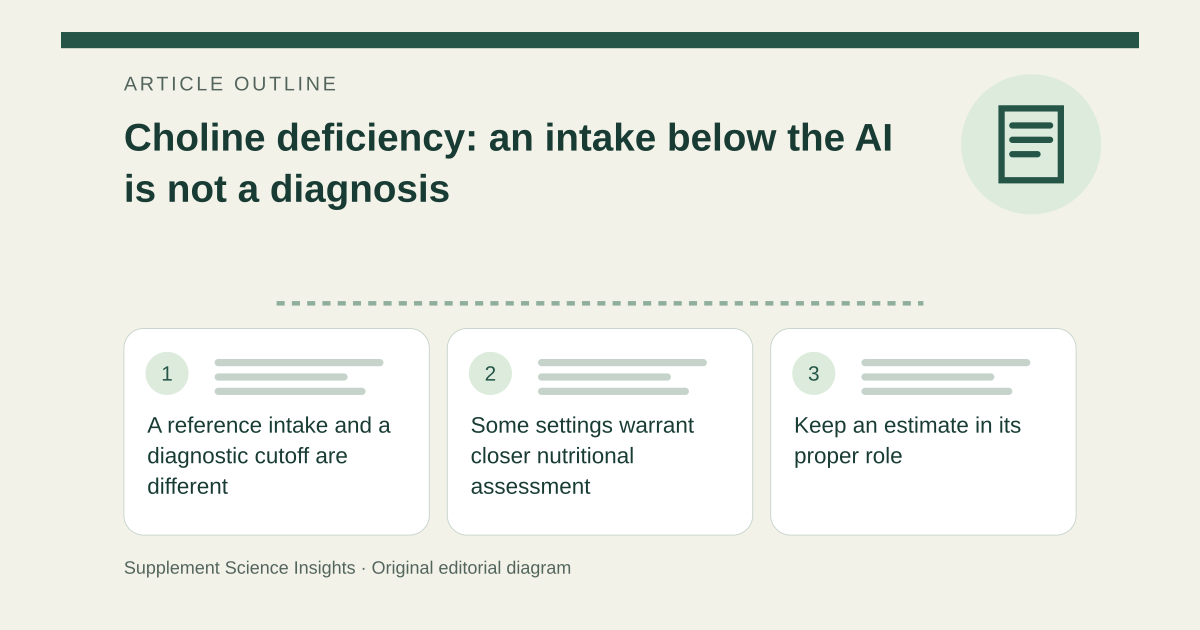
A reference intake and a diagnostic cutoff are different
ODS notes that many people consume less than the choline AI, yet frank deficiency is rare in healthy men and nonpregnant women. This is not a contradiction: the AI is a planning reference established without enough evidence for an average requirement, not a diagnostic threshold. [1]
Deficiency can cause liver and muscle damage. Those findings can have other causes, so symptoms or a single low dietary estimate cannot establish choline as the explanation. The body’s own synthesis also contributes to supply. [1]
Some settings warrant closer nutritional assessment
Pregnancy, certain genetic variations affecting choline metabolism and long-term parenteral nutrition appear among the risk settings in the ODS review. Folate, vitamin B12 and related methyl-group pathways can also influence the picture. These factors do not translate into a universal supplement dose. [1]
Plasma choline is not routinely measured in healthy people and may be maintained despite reduced intake through physiological mechanisms. A blood concentration therefore is not a simple inventory of dietary adequacy. Clinical and dietary information need to be interpreted together. [1]
Keep an estimate in its proper role
Imagine a food record estimates intake below the AI for one day. That identifies a question about usual intake, not established organ damage or a need for megadoses. Repeated dietary patterns and the person’s health context matter more than one comparison.
| Item | Interpretation |
|---|---|
| One-day estimate | Limited sample of intake |
| Below the AI | Does not diagnose deficiency |
| Clinical assessment | Considers diet and physiology together |
Sources for this article
- NIH ODS: Choline — Health Professional Fact Sheet
Source consulted: 2026-09-17. This is a reference resource, not a claim that we conducted the studies or tested a product.