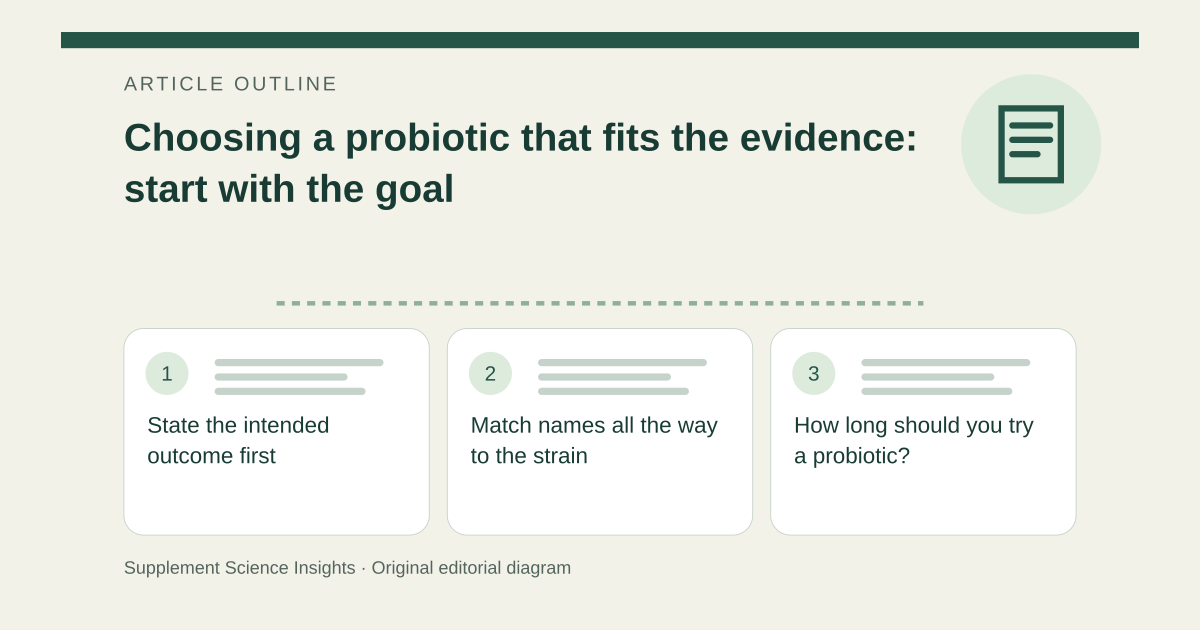
State the intended outcome first
Prevention of a particular antibiotic-associated problem is different from treating chronic bloating or improving an undefined microbiome score. Evidence for one outcome does not establish another. ODS describes varied findings across conditions and does not support treating every probiotic as a general-purpose solution. [1]
Match names all the way to the strain
Genus and species names are only part of identification. The strain designation and any studied combination matter. Check the amount and formulation, not just whether one familiar species appears somewhere in a long blend. A product containing extra strains is not automatically more effective than the studied preparation. [1]
How long should you try a probiotic?
There is no single trial length for every probiotic or health goal. For adults with IBS who choose to try a probiotic, UK NICE guidance advises using it for at least four weeks at the manufacturer’s recommended amount while monitoring its effect. That is IBS-specific guidance, not a promise of benefit or a four-week rule for vaginal symptoms, antibiotic-associated problems or every digestive complaint. [2][3]
Guidelines also differ: the American Gastroenterological Association recommends probiotics for symptomatic IBS only in a clinical-trial setting because of an evidence gap. Before buying repeated bottles, agree on the symptom to track and a review date. Worsening symptoms or a condition needing treatment are reasons to seek assessment, not to keep escalating CFUs or wait indefinitely. [2][3]
Check delivery and personal safety
Imagine the strain matches a study but the label guarantees CFU only at manufacture and gives unclear storage information. The evidence match is incomplete because the delivered viable amount is uncertain. Severe illness or immunocompromise also changes the safety assessment. A credible choice keeps those limits visible instead of relying on stars, popularity or a large number. [1]
| Example | Interpretation |
|---|---|
| Defined goal | Selects the relevant evidence |
| Exact strain combination | Prevents borrowing unrelated findings |
| Viability through expiry | Helps assess delivered exposure |
Sources for this article
- Probiotics - Health Professional Fact Sheet
Source consulted: 2026-09-20. This is a reference resource, not a claim that we conducted the studies or tested a product. - NICE CG61: irritable bowel syndrome, recommendation 1.2.1.6
Source consulted: 2026-09-25. This is a reference resource, not a claim that we conducted the studies or tested a product. - AGA: role of probiotics in gastrointestinal disorders, recommendation 6
Source consulted: 2026-09-25. This is a reference resource, not a claim that we conducted the studies or tested a product.