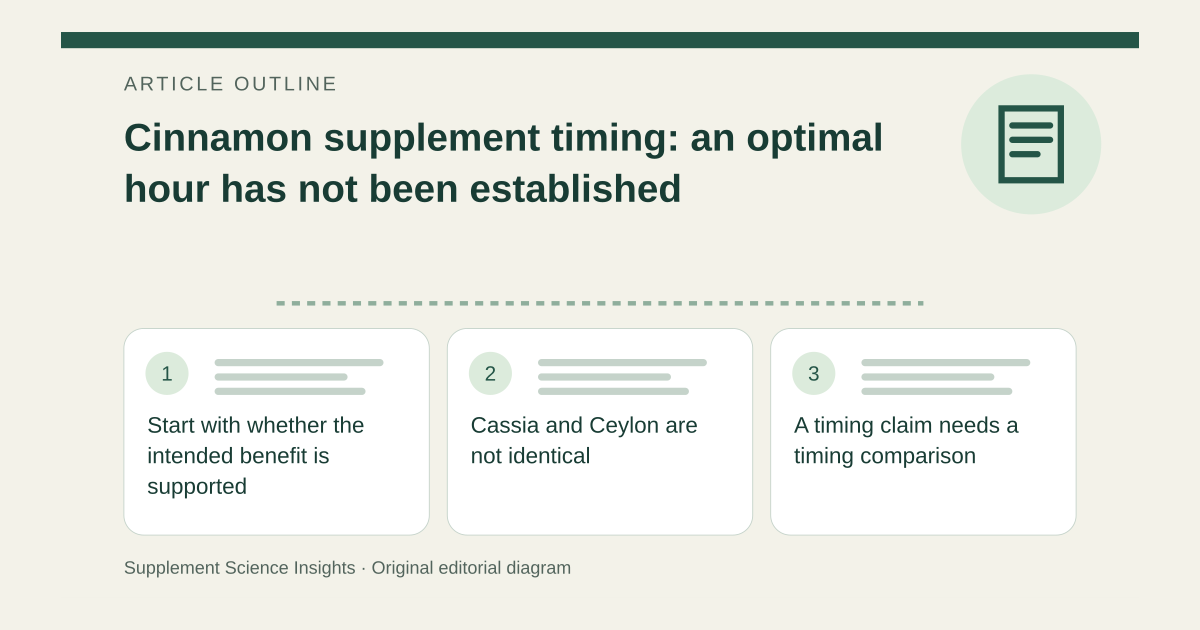
Start with whether the intended benefit is supported
NCCIH finds the evidence unclear for cinnamon supplementation in diabetes or weight loss. That uncertainty cannot be solved by recommending a particular time of day without timing-specific evidence. [1]
A spice used in food is also not the same exposure as a concentrated supplement. Products can differ in species, plant part and chemical composition. [1]
Cassia and Ceylon are not identical
Cassia cinnamon can contain coumarin, and prolonged use can be a concern for susceptible people, including those with liver disease. Ceylon cinnamon typically contains much less, but that distinction does not prove a clinical benefit. [1]
Review medicinal use with the care team, particularly alongside medicines. Do not substitute cinnamon for prescribed treatment or increase the amount because a promised effect has not appeared. [1]
A timing claim needs a timing comparison
Imagine a label says to take cinnamon at bedtime for better glucose control. Without appropriate comparative evidence, the clock time is a direction on that product, not proof that bedtime is superior or that the treatment works.
| Detail | Interpretation |
|---|---|
| Morning versus night | No established optimal rule |
| Species and preparation | Can change exposure |
| Food seasoning | Different from medicinal use |
Sources for this article
- Cinnamon: Usefulness and Safety | NCCIH
Source consulted: 2026-09-17. This is a reference resource, not a claim that we conducted the studies or tested a product.