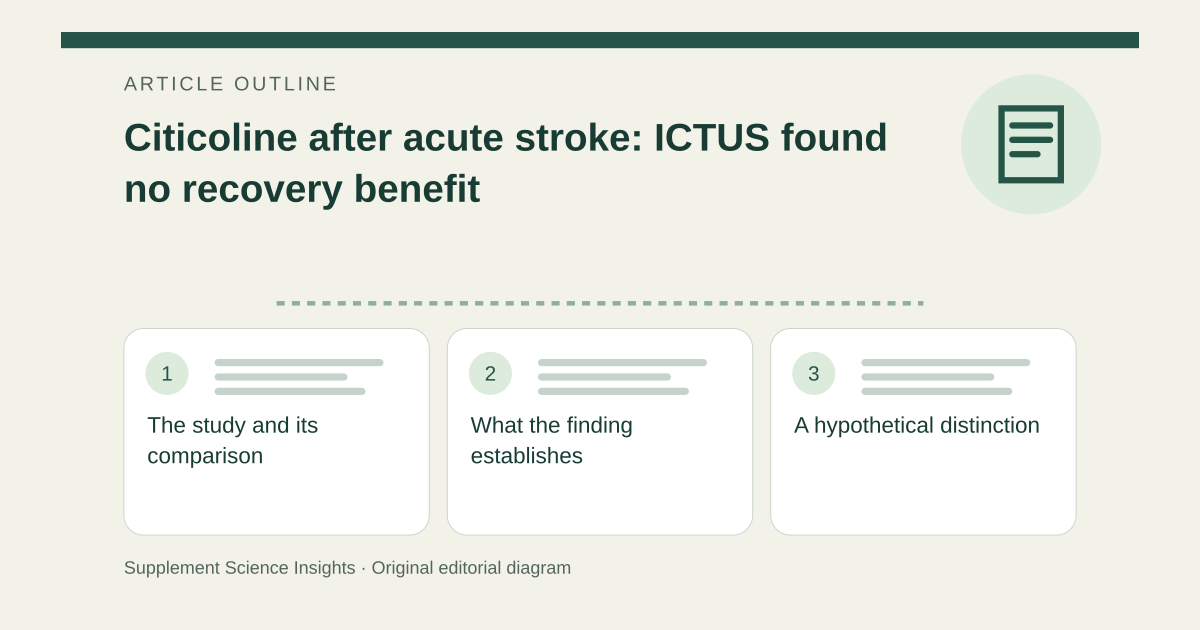
The study and its comparison
ICTUS randomized 2,298 adults with moderate-to-severe acute ischemic stroke to citicoline or placebo within 24 hours. Treatment began intravenously and continued orally for six weeks. [1]
The combined recovery endpoint at 90 days was similar between groups: odds ratio 1.03, with a 95-percent confidence interval of 0.86–1.25. The trial stopped at a planned interim analysis for futility. [1]
What the finding establishes
This clinical outcome should not be replaced by a theoretical neuroprotection claim or results from healthy memory volunteers. Ferrer Grupo funded the trial; full conflict details were not established from the abstract. A supplement is not a reason to delay emergency stroke care. [1]
A hypothetical distinction
Imagine smaller studies suggest promise but a larger trial is null. The larger clinical comparison remains essential evidence.
| Detail | Interpretation |
|---|---|
| Measured outcome | Keep the endpoint specific |
| Study preparation | Not every retail product |
| Remaining uncertainty | Not resolved by a mechanism |
Sources for this article
- Citicoline in the treatment of acute ischaemic stroke: an international, randomised, multicentre, placebo-controlled study (ICTUS trial).
Source consulted: 2026-09-19. This is a reference resource, not a claim that we conducted the studies or tested a product.