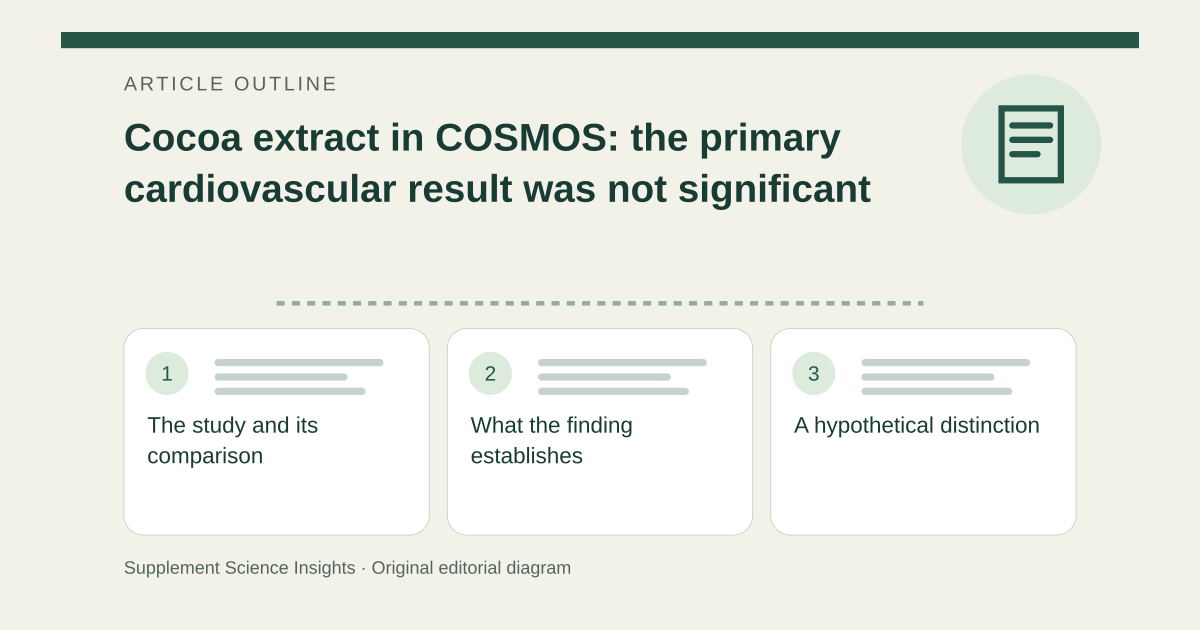
The study and its comparison
COSMOS randomized 21,442 older US adults in a factorial trial of cocoa extract and multivitamins. The cocoa preparation supplied five hundred milligrams of flavanols daily and was compared with placebo. [1]
Over a median 3.6 years, the primary cardiovascular-event composite did not significantly decline. Cardiovascular death, a secondary outcome, favored cocoa extract; several other individual outcomes did not. An adherence-based analysis also looked more favorable. [1]
What the finding establishes
Secondary and adherence analyses should not replace the randomized primary result. The extract comparison is not a trial of ordinary chocolate, melatonin or sleep. Complete funding and conflicts were not established from the abstract. The findings leave a potential cardiovascular effect worth testing, rather than establishing that eating chocolate prevents heart disease. [1]
A hypothetical distinction
Imagine the primary outcome is uncertain while one secondary endpoint improves. Keep their roles visible in the conclusion.
| Detail | Interpretation |
|---|---|
| Measured outcome | Keep the endpoint specific |
| Study preparation | Not every retail product |
| Remaining uncertainty | Not resolved by a mechanism |
Sources for this article
- Effect of cocoa flavanol supplementation for the prevention of cardiovascular disease events: the COcoa Supplement and Multivitamin Outcomes Study (COSMOS) randomized clinical trial.
Source consulted: 2026-09-19. This is a reference resource, not a claim that we conducted the studies or tested a product.