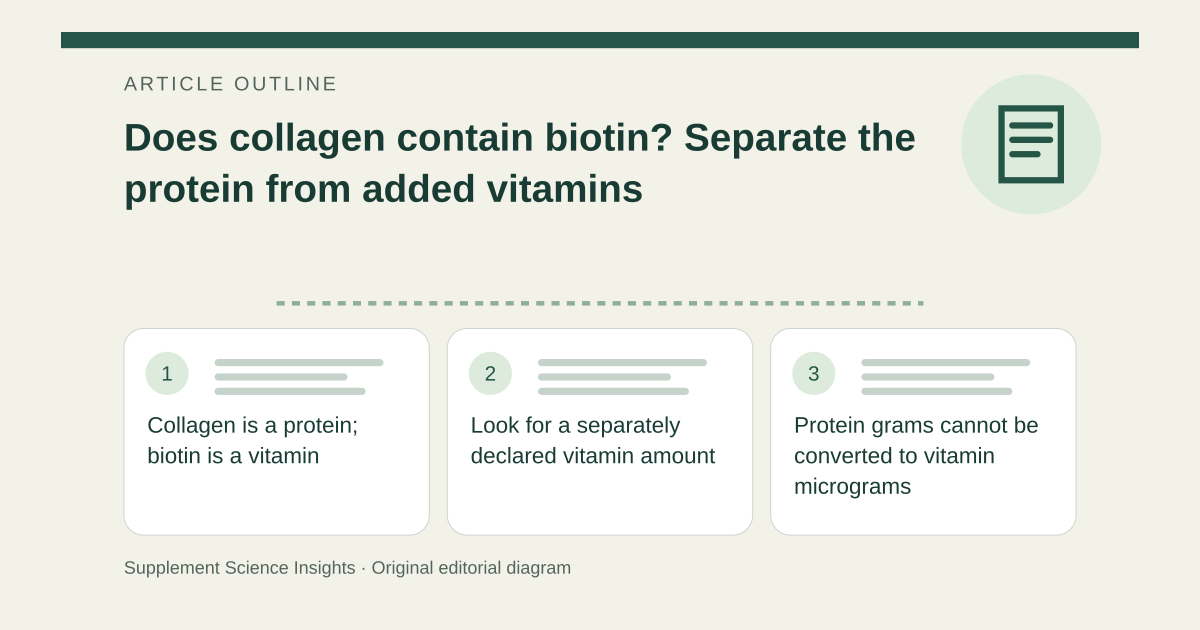
Collagen is a protein; biotin is a vitamin
Collagen consists of polypeptide chains with a characteristic amino-acid pattern rich in glycine and proline-related residues. Biotin is a B vitamin that supports enzymes involved in metabolism. It is not one of the amino acids defining a collagen chain. [1][2]
That chemical distinction does not mean every collagen-containing food or mixture is biotin-free. Foods and formulated products can contain many substances. It means that the presence of collagen alone cannot be used to calculate a vitamin dose. [1][2]
Look for a separately declared vitamin amount
A manufacturer may combine collagen peptides with biotin and other ingredients. Read the nutrient declaration and ingredient list rather than treating the name of the protein as a vitamin claim. A blend’s added biotin also does not demonstrate that the combination improves nails or hair. [2]
Tell the laboratory and clinician about supplemental biotin before blood testing. ODS explains that biotin can interfere with some assays, including certain hormone tests; the relevant instructions depend on the assay and exposure. [2]
Protein grams cannot be converted to vitamin micrograms
Imagine a powder lists 10 g collagen and separately declares biotin. The biotin amount comes from that declaration, not a conversion of the 10 g protein. A collagen-only ingredient description leaves the vitamin amount unresolved.
| Observation | What it establishes |
|---|---|
| Collagen grams | Protein amount |
| Biotin micrograms | Separate vitamin amount |
| Combination name | Not proof of clinical synergy |
Sources for this article
- StatPearls: Biochemistry, Collagen Synthesis
Source consulted: 2026-09-17. This is a reference resource, not a claim that we conducted the studies or tested a product. - NIH ODS: Biotin
Source consulted: 2026-09-17. This is a reference resource, not a claim that we conducted the studies or tested a product.