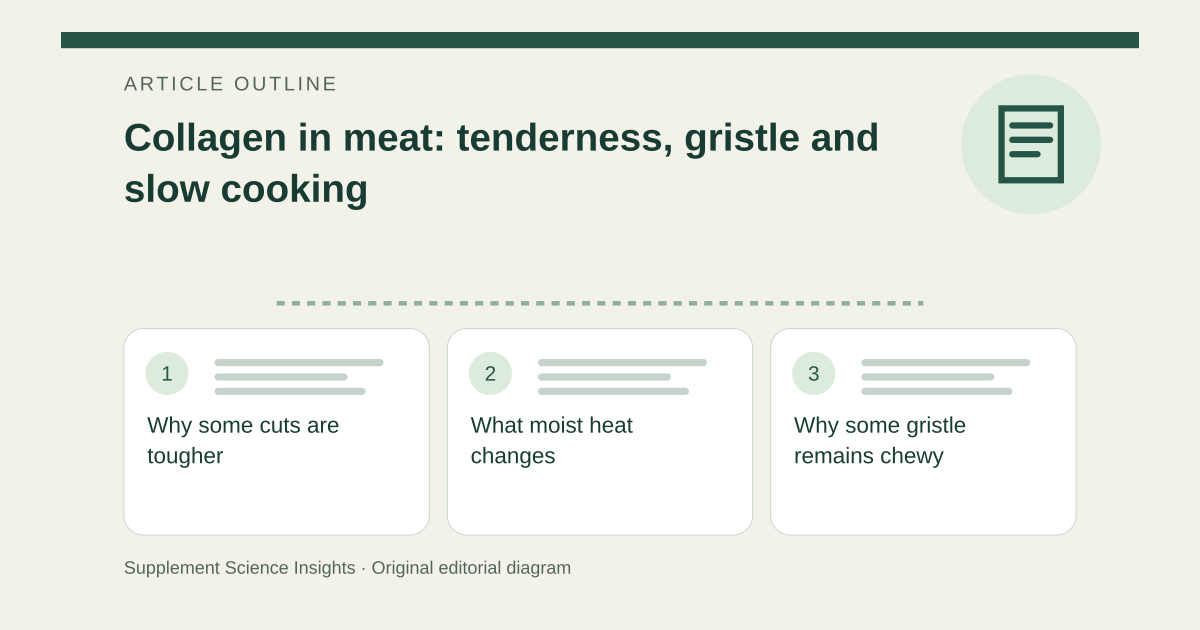
Why some cuts are tougher
Meat contains muscle and connective tissue. Collagen is a major connective-tissue protein that helps provide strength. Cuts from heavily used or weight-bearing regions often contain more connective tissue, and its amount and organization influence how difficult the meat is to chew. [1][2]
Tenderness also depends on factors besides collagen, including the animal, the cut and handling after slaughter. A single collagen explanation cannot predict every difference between two pieces of meat. Fat and moisture affect the eating experience as well, but they are not the same thing as connective tissue. [1][2]
What moist heat changes
Slow cooking with moisture can convert collagen into gelatin and soften collagen-rich connective tissue. This is why braising and stewing are useful methods for suitable tougher cuts. The process takes time; simply raising the heat does not guarantee a more tender result. [1]
Muscle proteins can also change during cooking, so softening connective tissue and preserving juiciness are related but separate goals. Choose a method appropriate to the cut, and use a reliable food-safety cooking guide for the required temperature rather than treating tenderness as a safety test. [1]
Why some gristle remains chewy
The word gristle is a everyday description of tough connective material, not a precise chemical analysis. Connective tissue includes collagen and elastin, and cartilage has its own organized matrix. Elastin does not soften with moist heat in the same way collagen does. [2][1]
Consequently, a chewy band that remains after a long cook is not proof that collagen never breaks down. Its composition may differ from the collagen-rich tissue that has softened. Trimming particularly tough material and selecting an appropriate cut can be more effective than extending the cooking time indefinitely. [2][1]
Is eating it especially good for you?
Collagen-containing tissue contributes protein, but dietary protein is broken down during digestion into smaller components, including amino acids. It is not transferred intact from the plate into a person's skin, joints or tendons. The presence of collagen in a food does not establish a specific therapeutic benefit from eating gristle. [3]
There is also no need to force down unpleasantly tough pieces to obtain protein. Many animal and plant foods supply amino acids. A nutritional decision should consider the whole diet and the food's overall composition, not only whether it contains visible connective tissue. [3]
A hypothetical cooking comparison
Imagine a collagen-rich shoulder cut and a relatively tender cut prepared for a meal. A long, moist cooking method may suit the shoulder's connective tissue. It does not follow that the already tender cut needs the same treatment, or that every tough band in the shoulder will soften equally. The material and the cooking goal need to match. [1][2]
| Material | Relevant distinction |
|---|---|
| Collagen-rich connective tissue | Can soften with prolonged moist cooking |
| Elastin-rich tissue | Does not respond in the same way |
| Protein eaten as food | Digested, not installed intact in your tissues |
Sources for this article
- Science of Meat: What Makes Meat Juicy and Tender? | Exploratorium
Source consulted: 2026-09-20. This is a reference resource, not a claim that we conducted the studies or tested a product. - Science of Cooking: Ask the Inquisitive Cooks!
Source consulted: 2026-09-20. This is a reference resource, not a claim that we conducted the studies or tested a product. - Protein in diet: MedlinePlus Medical Encyclopedia
Source consulted: 2026-09-20. This is a reference resource, not a claim that we conducted the studies or tested a product.