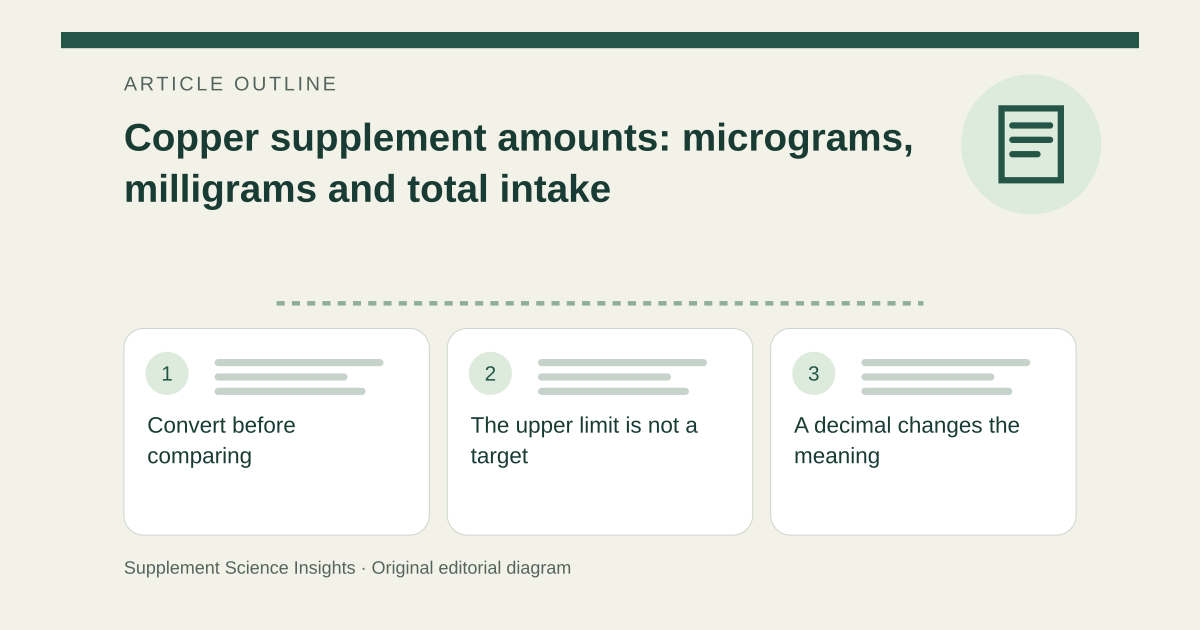
Convert before comparing
The U.S. adult recommended dietary allowance is 900 micrograms daily, equal to 0.9 mg. Pregnancy and lactation recommendations differ. The allowance covers total intake, including food; it is not an instruction for everyone to add a 0.9 mg capsule. [1]
Nuts, seeds, shellfish and several other foods contribute copper. A product amount and a dietary requirement therefore need both the same units and the same source denominator before they can be compared. [1]
The upper limit is not a target
The adult upper limit is 10,000 micrograms, or 10 mg, daily from food and supplements for healthy people. It is not an optimal intake. High chronic exposure can cause digestive symptoms and liver damage. [1]
People with Wilson disease have a specific copper-handling disorder and should not apply routine supplement advice to themselves. Treatment of confirmed deficiency also requires a clinical plan; the nutritional allowance does not define a replacement regimen or a universal time of day. [1]
A decimal changes the meaning
Imagine a label supplies 2 mg copper. That equals 2,000 micrograms, not 200 micrograms. It exceeds the adult RDA before food is counted, although exceeding an RDA is not the same as exceeding the upper limit or establishing toxicity.
| Observation | What it establishes |
|---|---|
| 0.9 mg | 900 micrograms |
| 2 mg | 2,000 micrograms |
| 10 mg UL | Total adult intake; not a goal |
Sources for this article
- NIH ODS: Copper
Source consulted: 2026-09-17. This is a reference resource, not a claim that we conducted the studies or tested a product.