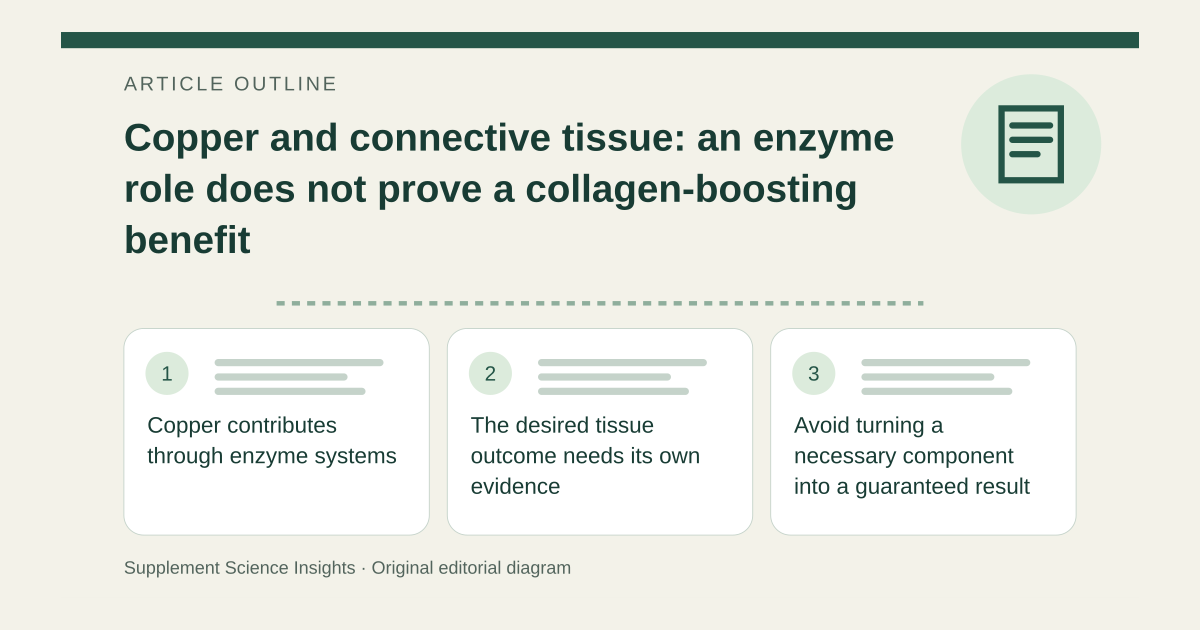
Copper contributes through enzyme systems
ODS describes copper as a cofactor for enzymes involved in connective-tissue synthesis, energy production and iron metabolism, among other processes. A cofactor helps an enzyme function; it is not itself a substitute for all the materials and processes involved in building tissue. [1]
This establishes why adequate copper matters. It does not establish a direct relationship in which every additional milligram creates more collagen or a measurable improvement in skin or joint outcomes. [1]
The desired tissue outcome needs its own evidence
An oral supplement claim about wrinkle reduction or tendon repair needs clinical evidence for that preparation and outcome. The general nutritional function cannot supply an effect size, treatment duration or useful dose. Topical copper-containing preparations also represent a different intervention from oral copper. [1]
Copper status is not captured perfectly by one blood test. ODS notes that circulating copper and ceruloplasmin can be influenced by inflammation, pregnancy and other factors. A cosmetic concern or isolated laboratory result should not be treated as proof of deficiency. [1]
Avoid turning a necessary component into a guaranteed result
Imagine a product cites copper-dependent enzymes and promises stronger tendons. The cited mechanism explains biological involvement. Demonstrating stronger tendons would require a relevant clinical measurement, not only evidence that the enzyme uses copper.
| Observation | What it establishes |
|---|---|
| Copper-dependent enzyme | Biological role |
| Extra oral copper | An intervention |
| Improved tendon or skin outcome | Not established by the mechanism |
Sources for this article
- NIH ODS: Copper — Health Professional Fact Sheet
Source consulted: 2026-09-17. This is a reference resource, not a claim that we conducted the studies or tested a product.