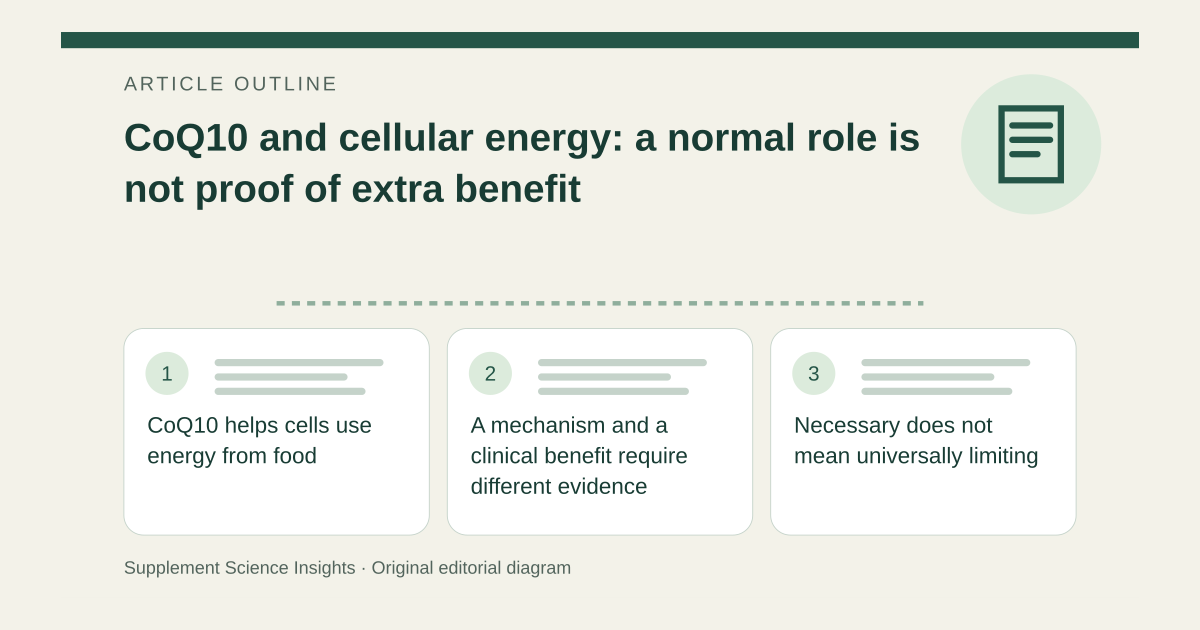
CoQ10 helps cells use energy from food
MedlinePlus Genetics describes CoQ10’s role in mitochondrial oxidative phosphorylation, a process that converts energy from food into a form cells can use. It also describes antioxidant functions in cell membranes. [1]
These physiological roles explain why a substantial deficiency can matter. They do not establish that the same process is improved by adding CoQ10 when no relevant deficiency or treatment indication is present. [1]
A mechanism and a clinical benefit require different evidence
The NCI description identifies CoQ10 as a compound made by the body and lists ubiquinone among its names. A cellular-function description should not be turned into a promise of improved stamina, mood or disease treatment. [2][1]
For a supplement claim, look for the tested population, formulation and outcome. Changes in a biochemical measure or knowledge of the pathway are not equivalent to a demonstrated improvement in daily functioning. [2][1]
Necessary does not mean universally limiting
Imagine a product says CoQ10 is required for energy production and therefore everyone needs more. The first statement describes normal function; the second needs separate evidence about additional intake and benefit.
| Detail | Interpretation |
|---|---|
| Normal CoQ10 role | Part of cellular metabolism |
| Deficiency disorder | A specific clinical context |
| Extra supplementation | Separate evidence question |
Sources for this article
- Primary coenzyme Q10 deficiency: MedlinePlus Genetics
Source consulted: 2026-09-17. This is a reference resource, not a claim that we conducted the studies or tested a product. - Coenzyme Q10 - NCI
Source consulted: 2026-09-17. This is a reference resource, not a claim that we conducted the studies or tested a product.