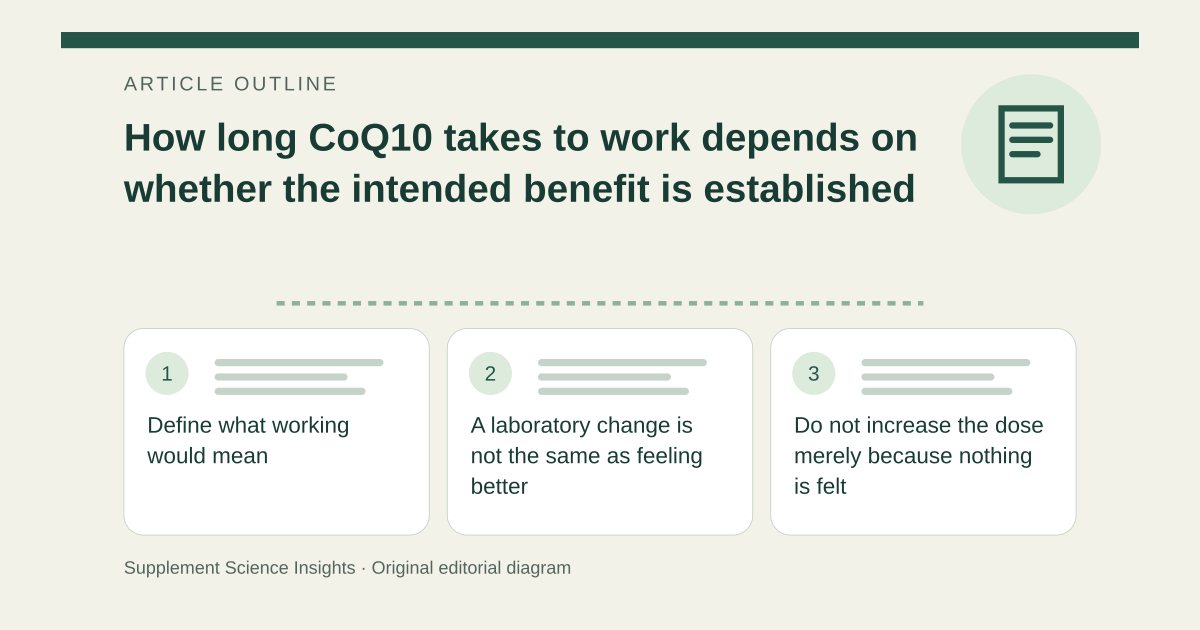
Define what working would mean
NCCIH describes mixed or inconclusive findings for several cardiovascular uses and limited research for other conditions. It also reports that overall evidence does not support CoQ10 for statin-related muscle pain. A promise that everyone will feel a benefit in a fixed number of days ignores these differences. [1]
A laboratory change is not the same as feeling better
CoQ10 has biological functions, but a higher measured level does not automatically demonstrate more energy, less pain or reduced disease risk. Choose the meaningful outcome and the relevant evidence before assigning a follow-up interval. [1][2]
Do not increase the dose merely because nothing is felt
Some people may notice no subjective change, including when a study endpoint is not a sensation. Increasing the amount can add exposure without establishing benefit. Insomnia, digestive effects and interactions remain possible during a trial of use. [1]
Set a review point with the clinician when treatment is intended
Imagine CoQ10 is proposed as an adjunct for a particular condition. Agree on the outcome, how it will be assessed and when to reconsider it. Do not postpone effective treatment while waiting for a supplement timetable taken from an unrelated condition. [1][3]
| Question | Why it matters |
|---|---|
| Which outcome? | Blood level and symptoms differ |
| Which condition? | Evidence differs by use |
| When review? | Avoid indefinite use without a purpose |
Sources for this article
- Coenzyme Q10 | NCCIH
Source consulted: 2026-09-21. This is a reference resource, not a claim that we conducted the studies or tested a product. - Coenzyme Q10 - NCI
Source consulted: 2026-09-21. This is a reference resource, not a claim that we conducted the studies or tested a product. - Dietary Supplements: What You Need to Know
Source consulted: 2026-09-21. This is a reference resource, not a claim that we conducted the studies or tested a product.