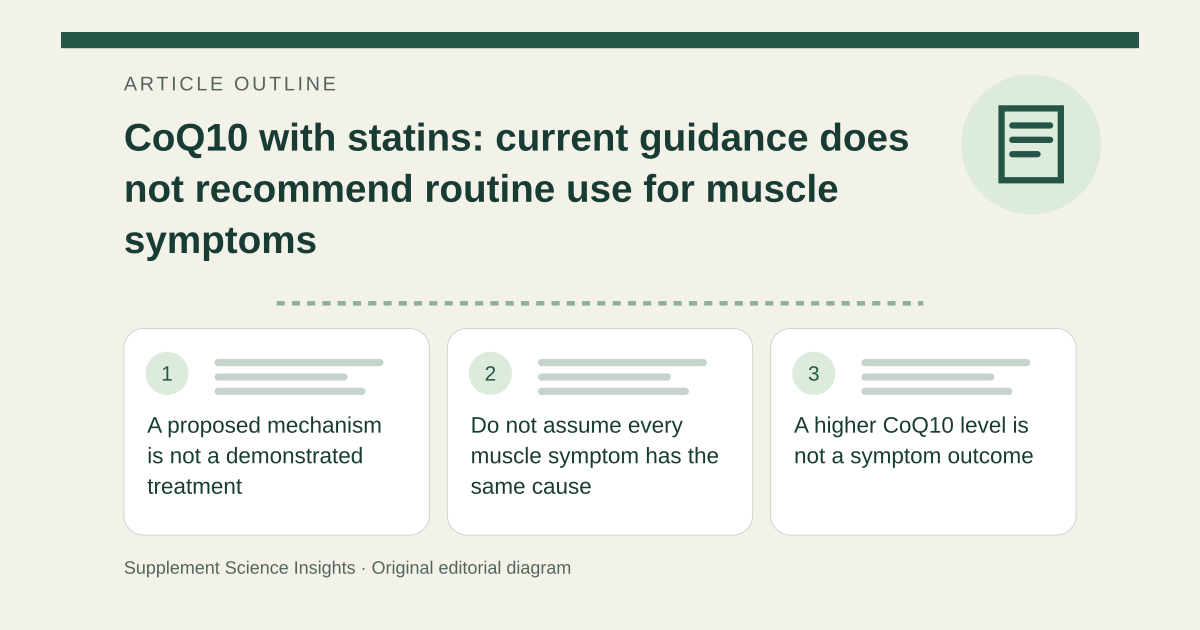
A proposed mechanism is not a demonstrated treatment
Depletion of CoQ10 has been proposed as one contributor to statin-associated muscle symptoms. The 2026 ACC/AHA-led dyslipidemia guideline acknowledges some analyses suggesting a small benefit but concludes that the overall evidence does not support routine CoQ10 for prevention or treatment of these symptoms. [1][2]
This current recommendation is consistent with the older NCCIH summary’s caution, but the guideline is the more recent source used here. Neither source establishes a supplement dose that everyone taking atorvastatin or another statin should add. [1][2]
Do not assume every muscle symptom has the same cause
The guideline advises assessing other contributors before attributing symptoms to the statin, including muscular activity, relevant disease and drug interactions. A supplement trial should not substitute for that evaluation. [1][2]
Bring the symptom timing, prescribed medicines and proposed CoQ10 product to the clinician. NCCIH also flags potential interactions with warfarin and insulin. This article provides no instruction to stop, reduce or replace prescribed lipid-lowering treatment. [1][2]
A higher CoQ10 level is not a symptom outcome
Imagine a study shows a blood CoQ10 increase after supplementation but does not demonstrate improved muscle symptoms. The concentration change cannot establish the clinical claim. The actual patient-reported or functional outcome is the relevant comparison.
| Question | What matters |
|---|---|
| CoQ10 concentration | Biochemical measurement |
| Muscle symptoms | Clinical outcome |
| Routine supplementation | Not recommended by the 2026 guideline |
Sources for this article
- 2026 ACC/AHA-led Guideline on the Management of Dyslipidemia
Source consulted: 2026-09-17. This is a reference resource, not a claim that we conducted the studies or tested a product. - NCCIH: Coenzyme Q10
Source consulted: 2026-09-17. This is a reference resource, not a claim that we conducted the studies or tested a product.