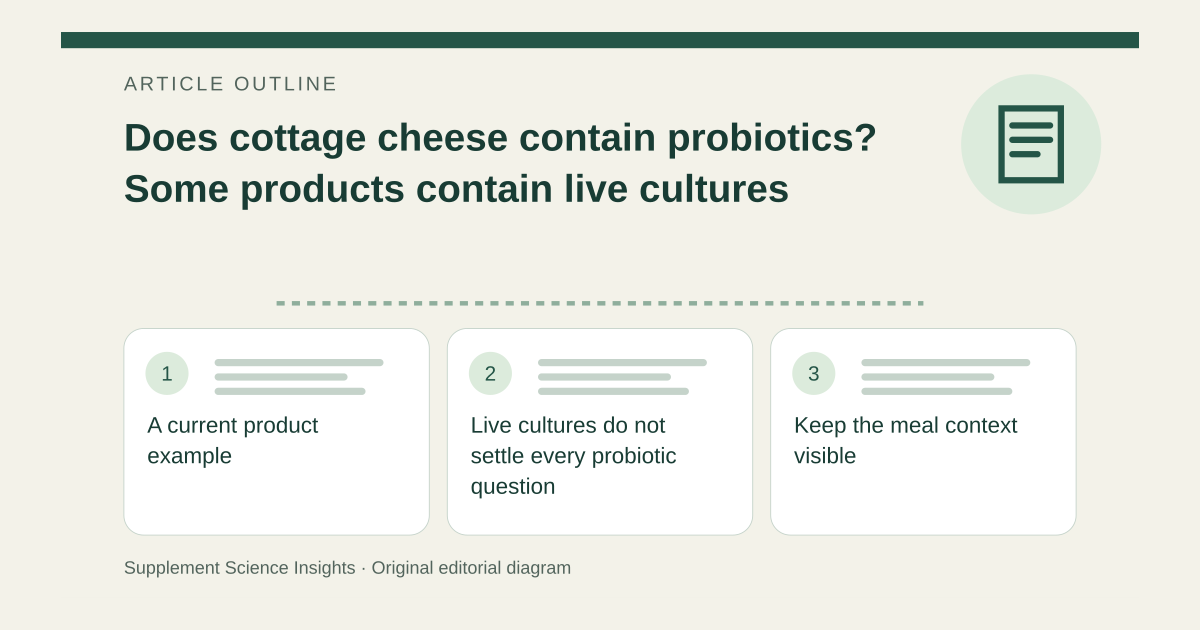
A current product example
Good Culture’s Organic 2% Milkfat 16 oz product lists live and active Lactococcus and Lactobacillus cultures. Its page lists 14 g protein per 110 g serving. This confirms what the manufacturer declares for that formulation; it is not independent laboratory verification of a container or a claim about all cottage cheese. [1]
Live cultures do not settle every probiotic question
ODS defines probiotics by live organisms supplied in adequate amounts with a health benefit. The inspected label’s genus-level culture names do not identify a specific studied strain or establish that eating the serving treats IBS, constipation or another condition. A food can still be useful without making those treatment claims. [2]
Keep the meal context visible
The same product page lists 380 mg sodium per 110 g serving. Protein, sodium, portion size and personal dietary needs remain relevant even when a package highlights cultures. Product variants and serving sizes differ, so do not transfer one container’s numbers to another. [1]
Ask the right follow-up question
Imagine a cottage cheese lists cultures but no strain code. That supports asking the manufacturer what culture and viable amount it provides, not assigning the CFU number from a different brand. Choose it as a food on its actual merits and seek separate evidence for a therapeutic claim. [2][1]
| Question | Evidence needed |
|---|---|
| Does it contain cultures? | Exact ingredient statement |
| How much protein? | Serving-specific nutrition label |
| Does it treat a condition? | Relevant strain and outcome evidence |
Sources for this article
- Organic Cottage Cheese, 2% Milkfat, 16 oz - Good Culture
Source consulted: 2026-09-20. This is a reference resource, not a claim that we conducted the studies or tested a product. - Probiotics - Health Professional Fact Sheet
Source consulted: 2026-09-20. This is a reference resource, not a claim that we conducted the studies or tested a product.