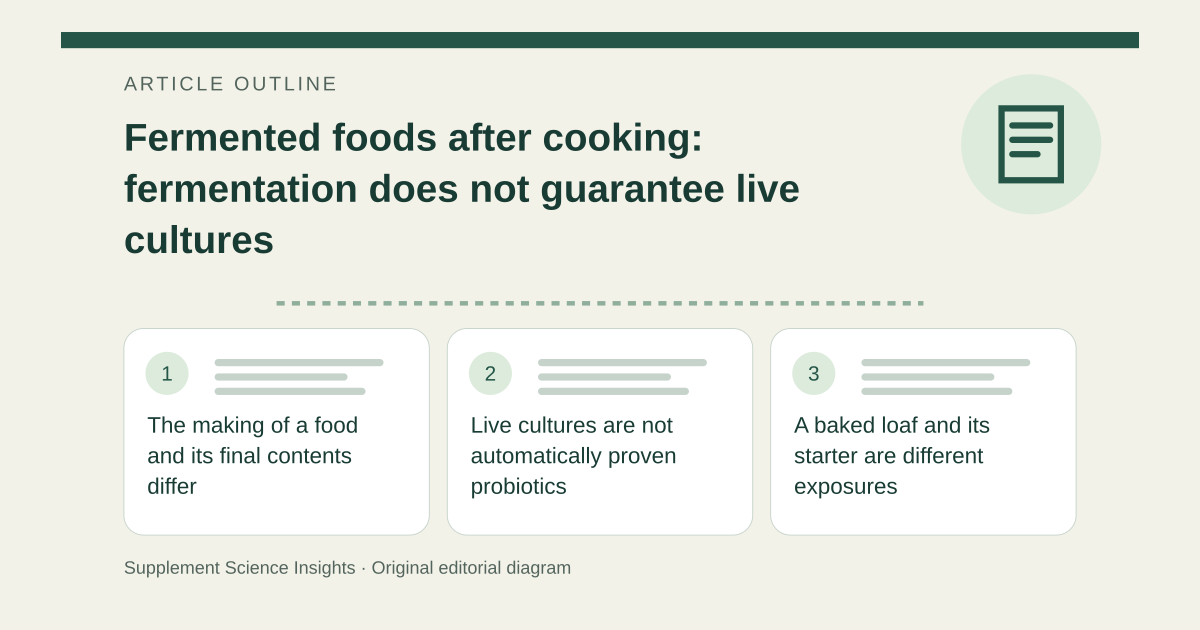
The making of a food and its final contents differ
ODS explains that fermented foods result from microbial growth and metabolism. Some are processed afterward, so they no longer contain live cultures when eaten. Sourdough bread is one example: fermentation during preparation does not mean the baked loaf delivers live starter organisms. [1]
This distinction is relevant to heated or pasteurized fermented foods more broadly. The actual process and final product determine viability; the word fermented alone cannot answer the question. [1]
Live cultures are not automatically proven probiotics
The ODS summary also distinguishes live-culture fermented foods from foods containing microorganisms with established probiotic evidence. Many familiar fermented foods contain microbes without demonstrating a specific strain-related clinical benefit. [1]
Loss of live cultures does not establish that a food loses all nutritional value. Conversely, retaining living organisms does not establish that the food treats a disease. Nutrition, viability and evidence of benefit are three separate questions. [1]
A baked loaf and its starter are different exposures
Imagine a starter contains active microorganisms before baking. Counting them at that stage cannot establish the live count in the finished bread. A final-product measurement or suitable process evidence would be needed to support a claim about what is consumed.
| Detail | Interpretation |
|---|---|
| Fermentation stage | Microbial activity occurred |
| Post-fermentation heating | Can change viability |
| Probiotic benefit | Requires additional evidence |
Sources for this article
- NIH ODS: Probiotics
Source consulted: 2026-09-17. This is a reference resource, not a claim that we conducted the studies or tested a product.