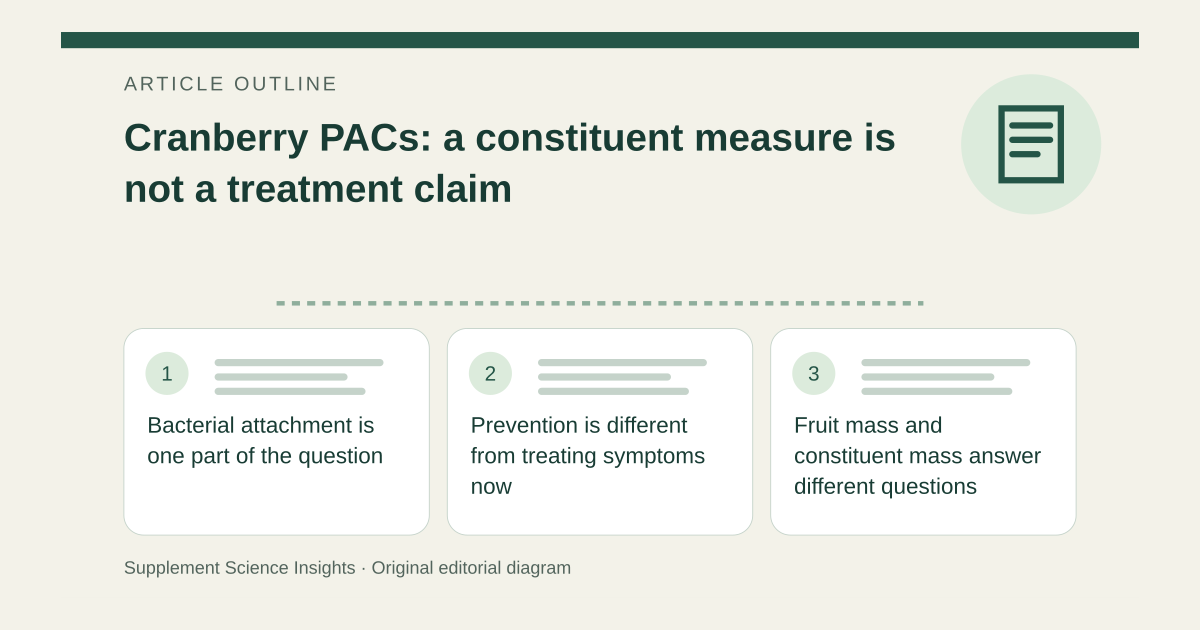
Bacterial attachment is one part of the question
NCCIH describes the hypothesis that cranberry PACs help prevent bacteria from adhering to the bladder wall. Processing can change constituent concentrations, so cranberry juice, whole-fruit powder and extracts should not be assumed to provide identical exposures. [1]
Mechanistic plausibility is not the same as a clinical result. A constituent measurement needs to remain attached to the actual preparation and the population in which outcomes were studied. [1]
Prevention is different from treating symptoms now
NCCIH describes possible reduction in recurrent symptomatic UTIs in some women, with inconsistent findings and differences across populations. It does not recommend cranberry as treatment for an existing UTI. [1]
Do not use a high PAC claim to defer assessment of suspected infection. Medication context matters too: evidence about interaction with warfarin is conflicting, so discuss use with the clinician managing anticoagulation. [1]
Fruit mass and constituent mass answer different questions
Imagine one label lists the mass of cranberry powder and another lists PAC content. The larger number is not automatically the stronger preventive intervention. Neither quantity establishes that urinary symptoms should be treated with the product.
| Observation | What it establishes |
|---|---|
| PAC | Proanthocyanidin constituent |
| Processing | Can change composition |
| Existing infection | Not a cranberry treatment indication |
Sources for this article
- NCCIH: Cranberry
Source consulted: 2026-09-17. This is a reference resource, not a claim that we conducted the studies or tested a product.