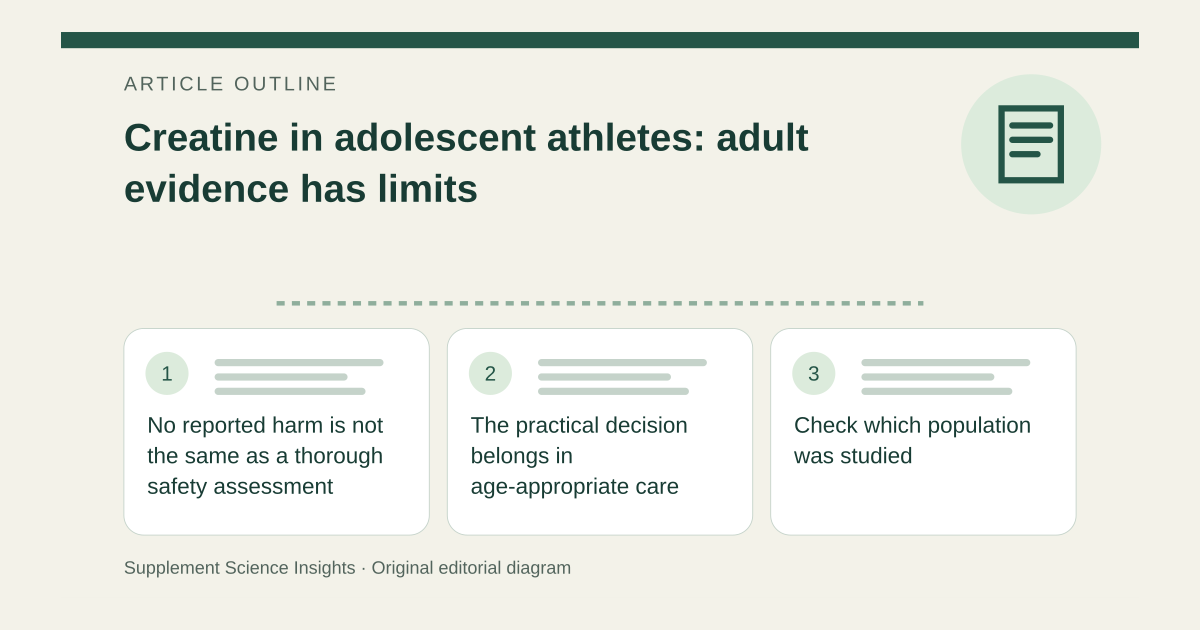
No reported harm is not the same as a thorough safety assessment
The 2021 creatine review notes that the adolescent performance studies it discusses did not examine specific clinical health markers in the way a dedicated safety study would. This limits conclusions about safety. [1][2]
Supervised pediatric studies for particular diseases also answer a different question from unsupervised performance use by otherwise healthy teenagers. [1][2]
The practical decision belongs in age-appropriate care
AAP guidance does not recommend routine performance supplementation for young athletes. The creatine review is more favorable but discloses substantial author relationships with the supplement industry. [1][2]
These differences should be visible rather than blended into an unqualified safe-for-all claim. Discuss the goal, diet, training and health history with an appropriate pediatric or sports-health professional. [1][2]
Check which population was studied
Imagine adult strength data are used to market a product to a 14-year-old. The adult finding does not supply all missing pediatric benefit and safety evidence.
| Detail | Interpretation |
|---|---|
| Adult trial | Different population |
| Short study without events | Limited safety information |
| Teen athlete | Needs age-appropriate assessment |
Sources for this article
- Common questions and misconceptions about creatine supplementation: what does the scientific evidence really show? | Journal of the International Society of Sports Nutrition | Springer Nature Link
Source consulted: 2026-09-18. This is a reference resource, not a claim that we conducted the studies or tested a product. - Performance-Enhancing Sports Supplements: Information for Parents - HealthyChildren.org
Source consulted: 2026-09-18. This is a reference resource, not a claim that we conducted the studies or tested a product.