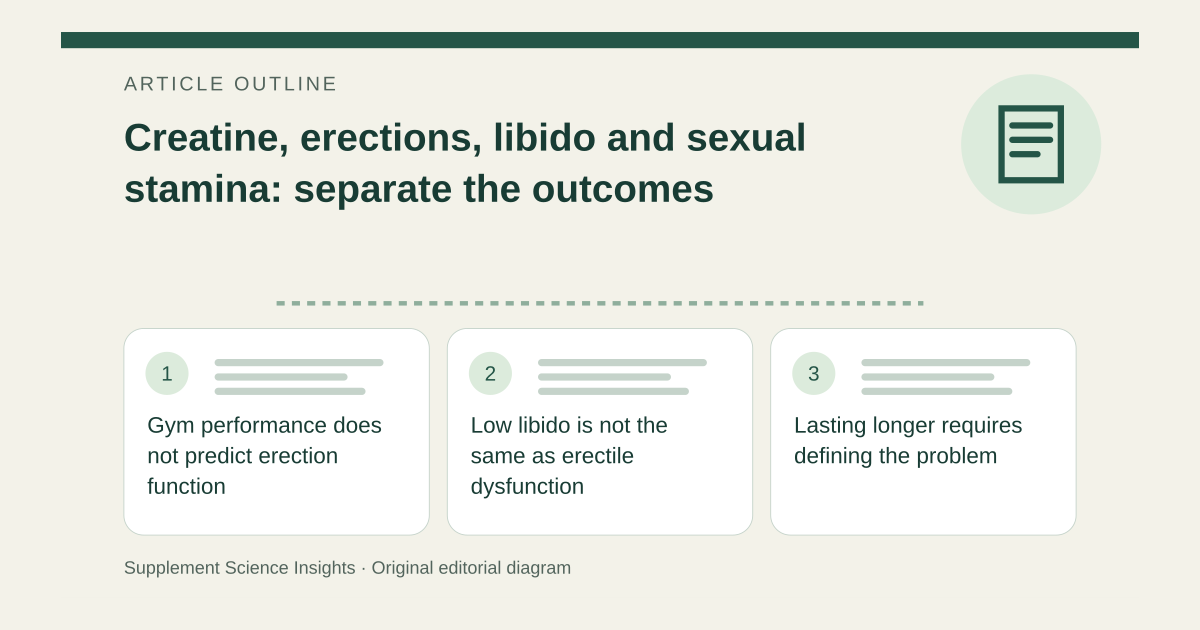
Gym performance does not predict erection function
NIH describes creatine benefits for repeated high-intensity effort and training. Erectile function is a different clinical outcome. NHS notes that persistent erection problems can relate to blood pressure, cholesterol, diabetes, medicines, hormones or psychological factors. Creatine is not established by these sources as either an ED treatment or a routine cause of ED. [1][2]
Low libido is not the same as erectile dysfunction
Sexual desire can change with relationships, stress, depression, health conditions, medicines or hormonal circumstances. The inspected sports and reproductive reviews do not establish that creatine predictably lowers libido. A change that starts during supplementation still belongs in the clinical history; timing alone is not proof of cause. [3][1][4]
Lasting longer requires defining the problem
Ejaculating sooner than desired, losing an erection and becoming physically tired are different experiences. Evidence for repeated sprints does not show that creatine delays ejaculation. NHS describes psychosexual and medical options for persistent ejaculation problems, selected according to the actual problem and health context. [1][5]
Hormone and fertility claims do not fill the gap
The creatine review does not support treating creatine like an anabolic steroid, but that distinction is not proof of enhanced sexual performance. Likewise, laboratory sperm observations do not measure desire, erection quality or ejaculation timing. The review disclosed multiple industry relationships. [4]
Choose an assessment that matches the symptom
For recurring erection problems, seek medical or sexual-health advice. For troubling loss of desire or persistent ejaculation difficulties, describe the symptom clearly and review medicines and products with the clinician. Do not self-adjust prescribed treatment to accommodate a supplement. [2][3][5]
Translate a vague promise into a concrete question
Imagine a product promises more stamina in bed because it contains creatine. Ask whether it means exercise endurance, erection maintenance, desire or ejaculation control. The established sports benefit does not answer all four. [1][2][5]
| Concern | Relevant outcome |
|---|---|
| Erection problems | Obtaining and maintaining an erection |
| Low libido | Sexual desire |
| Ejaculating sooner than desired | Ejaculation control and distress |
| Exercise fatigue | Different from the other outcomes |
Sources for this article
- Dietary Supplements for Exercise and Athletic Performance - Health Professional Fact Sheet
Source consulted: 2026-09-21. This is a reference resource, not a claim that we conducted the studies or tested a product. - Erectile dysfunction (impotence) - NHS
Source consulted: 2026-09-21. This is a reference resource, not a claim that we conducted the studies or tested a product. - Low sex drive (loss of libido) - NHS
Source consulted: 2026-09-21. This is a reference resource, not a claim that we conducted the studies or tested a product. - Part II. Common questions and misconceptions about creatine supplementation: what does the scientific evidence really show? - PMC
Source consulted: 2026-09-21. This is a reference resource, not a claim that we conducted the studies or tested a product. - Ejaculation problems - NHS
Source consulted: 2026-09-21. This is a reference resource, not a claim that we conducted the studies or tested a product.