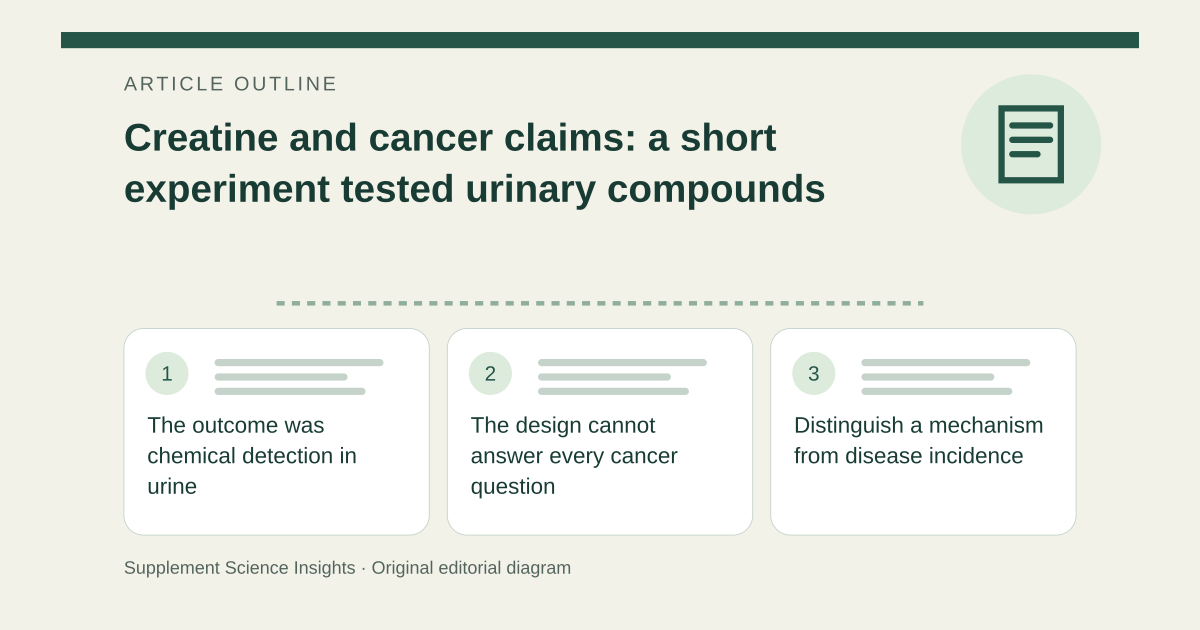
The outcome was chemical detection in urine
The single-blind crossover study tested lower- and higher-dose creatine protocols in healthy adults, with 21 participants in the first phase and 16 in the second. Some participants took part in both phases. Placebo always preceded creatine. [1]
After one day and 30 days, investigators assessed four heterocyclic amines associated with a proposed carcinogenic mechanism. Quantifiable detections were uncommon and did not increase with creatine. [1]
The design cannot answer every cancer question
The fixed treatment order, small samples and short exposure limit interpretation. Researchers did not follow participants for cancer diagnoses or test all possible biological pathways. A negative urinary finding cannot establish a lifetime cancer-risk estimate. [1]
The study received Brazilian public research support, and authors declared no related competing interests. Its findings challenge this specific proposed mechanism; they neither prove that creatine prevents cancer nor establish that every supplement preparation is risk-free. [1]
Distinguish a mechanism from disease incidence
Imagine an experiment finds no increase in a suspected chemical mediator over a month. That is evidence about the mediator under those conditions, not a decades-long comparison of cancer diagnoses.
| Detail | Interpretation |
|---|---|
| Urinary heterocyclic amines | Measured endpoint |
| One and 30 days | Sampling times |
| Cancer incidence | Not measured |
Sources for this article
- Can creatine supplementation form carcinogenic heterocyclic amines in humans? - PMC
Source consulted: 2026-09-19. This is a reference resource, not a claim that we conducted the studies or tested a product.