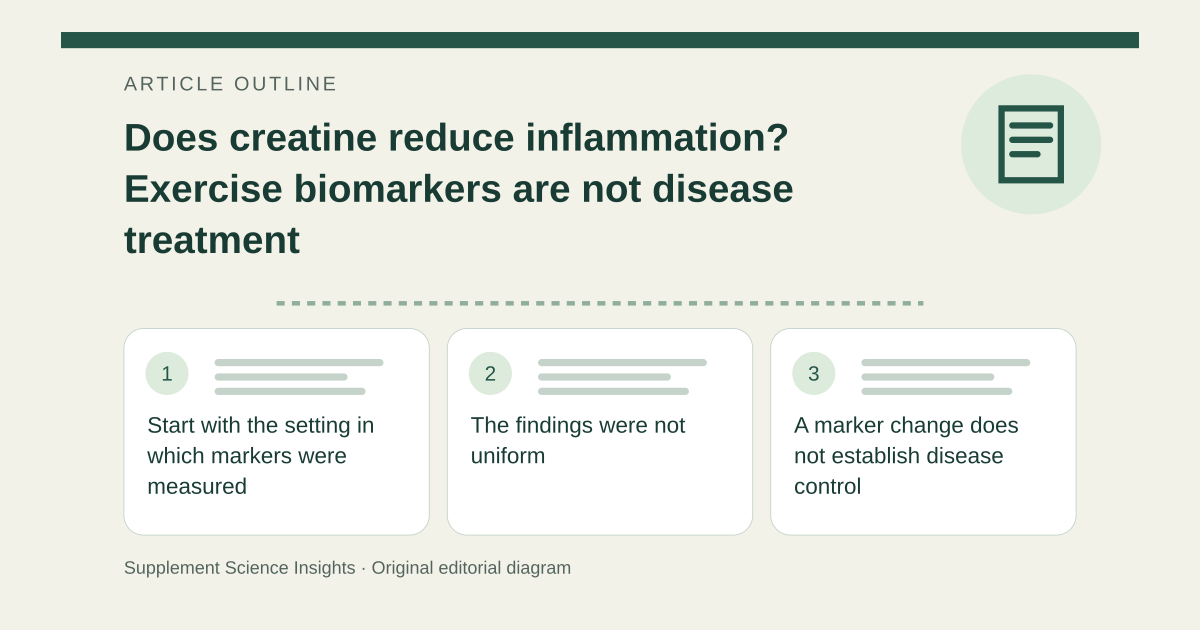
Start with the setting in which markers were measured
The 2025 narrative review describes short-term supplementation around strenuous aerobic and repeated-sprint exercise. Some studies reported smaller increases in selected inflammatory markers. A post-exercise blood-marker response is a specific outcome, not a measure of all inflammation throughout the body. [1]
The findings were not uniform
The review also describes a resistance-exercise study without a C-reactive protein effect. Differences in exercise volume, protocols and measurements make a single universal anti-inflammatory claim inappropriate. The authors considered the possible mechanisms and longer-term effects unresolved. [1]
A marker change does not establish disease control
Lowering one measured marker after exercise would not by itself show less arthritis pain, prevention of flares or reduced need for prescribed treatment. Joint pain can arise from injury, osteoarthritis, gout, autoimmune disease or infection, and management depends on the cause. [1][2]
Keep the established purpose separate
Creatine has better-established evidence for repeated high-intensity performance and training support. That sports role does not require calling it an anti-inflammatory medicine. The narrative review disclosed multiple industry relationships and no funding for the work; its exploratory findings need appropriate confirmation. [3][1]
Do not hide an urgent problem inside a recovery claim
A hot swollen joint with fever or feeling unwell needs urgent assessment. For a hypothetical athlete with persistent joint pain, review the injury or medical cause rather than increasing creatine because a marker study sounded promising. [2]
| Finding | Limit |
|---|---|
| Selected marker changed | Not every inflammatory pathway |
| After strenuous exercise | Not necessarily chronic disease |
| Short-term protocol | Long-term effect unresolved |
| Joint pain persists | Assess the cause |
Sources for this article
- Part II. Common questions and misconceptions about creatine supplementation: what does the scientific evidence really show? - PMC
Source consulted: 2026-09-21. This is a reference resource, not a claim that we conducted the studies or tested a product. - Joint pain - NHS
Source consulted: 2026-09-21. This is a reference resource, not a claim that we conducted the studies or tested a product. - Dietary Supplements for Exercise and Athletic Performance - Health Professional Fact Sheet
Source consulted: 2026-09-21. This is a reference resource, not a claim that we conducted the studies or tested a product.