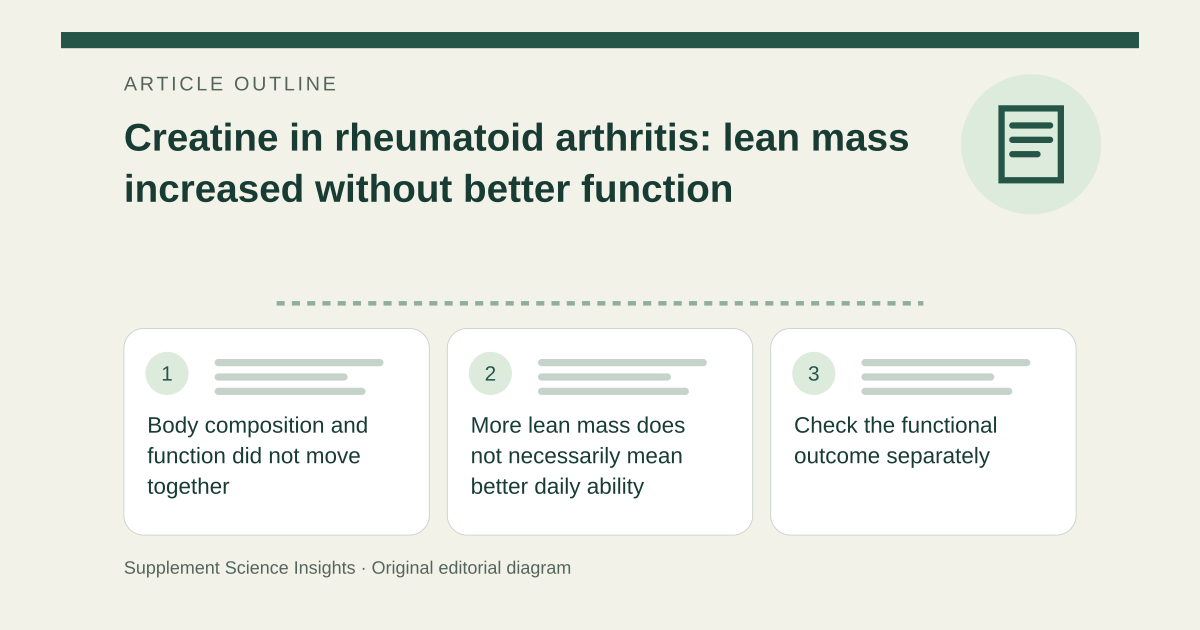
Body composition and function did not move together
Forty people with rheumatoid arthritis entered a double-blind trial of creatine or placebo. Supplementation lasted 12 weeks, with body composition, strength and physical function assessed. [1]
Creatine increased appendicular lean mass, a surrogate for muscle mass, by about half a kilogram relative to the reported analysis. Intracellular water also increased. Knee-extensor strength, handgrip strength and objective physical function did not improve compared with placebo. [1]
More lean mass does not necessarily mean better daily ability
The findings do not establish relief of joint inflammation, reduced disease activity or a substitute for rheumatoid arthritis treatment. A body-composition measure includes more than a direct measurement of newly formed contractile muscle. [1]
No treatment-related adverse effects were reported, but the small sample and short duration limit safety conclusions. Funding and conflicts were not established from the abstract. The practical value of the lean-mass change remains uncertain when function did not improve. [1]
Check the functional outcome separately
Imagine a scan reports more lean mass while measured strength stays unchanged. It would overstate the result to promise easier lifting or walking based on the scan alone.
| Detail | Interpretation |
|---|---|
| Appendicular lean mass | Increased |
| Intracellular water | Also increased |
| Measured strength and function | No comparative improvement |
Sources for this article
- Can Creatine Supplementation Improve Body Composition and Objective Physical Function in Rheumatoid Arthritis Patients? A Randomized Controlled Trial - PubMed
Source consulted: 2026-09-19. This is a reference resource, not a claim that we conducted the studies or tested a product.