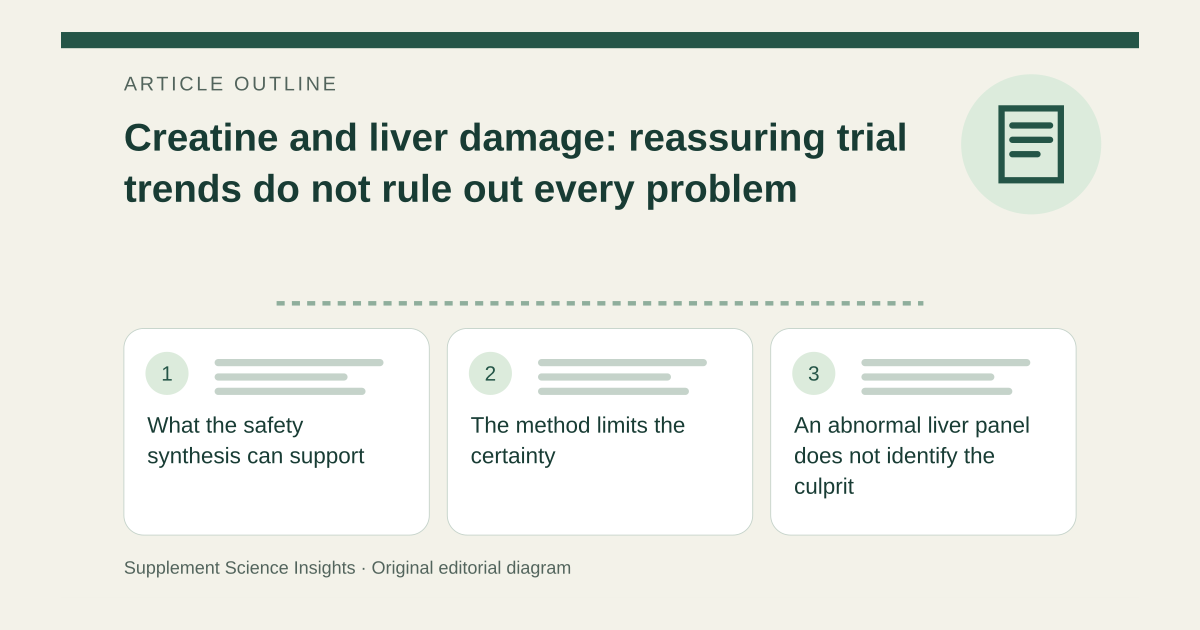
What the safety synthesis can support
A 2026 structured review examined adverse-event reporting across hundreds of randomized trials. It found no consistent dose- or duration-related pattern of clinically meaningful liver harm. This describes reported events in studied settings, rather than a guarantee that liver injury is impossible. [1]
The method limits the certainty
The analysis used trial-level reporting, with differences in monitoring and event definitions, and gave study arms equal weight regardless of size. Rare liver events make precise risk estimates difficult. The authors caution against treating null results as conclusive absence of risk. No external funding was reported, but several authors disclosed creatine-industry relationships. [1]
An abnormal liver panel does not identify the culprit
MedlinePlus explains that liver tests usually cannot diagnose the exact cause by themselves. Review the complete supplement, medicines, alcohol exposure and health history with the clinician. A result after starting creatine should neither be ignored nor automatically attributed to it. [2]
Do not apply general findings to every blend or disease
Most creatine evidence concerns monohydrate, while a bodybuilding mixture can contain other ingredients. Someone with established liver disease needs an individual decision about whether a supplement has a useful purpose and what monitoring is appropriate. [3][1]
Respond to warning symptoms
Yellow skin or eyes, dark urine, significant abdominal symptoms or persistent appetite loss deserve medical attention. FDA advises stopping a supplement suspected of causing a serious reaction and reporting the problem. Keep the container, lot and symptom timeline rather than trying a larger dose to test causation. [4][2]
| Finding | Next distinction |
|---|---|
| Abnormal panel | Cause not established by the result alone |
| New blend | Review every ingredient |
| Existing liver disease | Individual clinical decision |
| Jaundice or serious symptoms | Stop suspected product and seek care |
Sources for this article
- Creatine Supplementation Dose and Duration Are Not Associated with Increased Side Effects: A Structured Review and Study-Level Dose–Response Analysis of Randomized Controlled Trials - PMC
Source consulted: 2026-09-21. This is a reference resource, not a claim that we conducted the studies or tested a product. - Liver Function Tests: MedlinePlus Medical Test
Source consulted: 2026-09-21. This is a reference resource, not a claim that we conducted the studies or tested a product. - Dietary Supplements for Exercise and Athletic Performance - Health Professional Fact Sheet
Source consulted: 2026-09-21. This is a reference resource, not a claim that we conducted the studies or tested a product. - How to Report a Problem with Dietary Supplements | FDA
Source consulted: 2026-09-21. This is a reference resource, not a claim that we conducted the studies or tested a product.