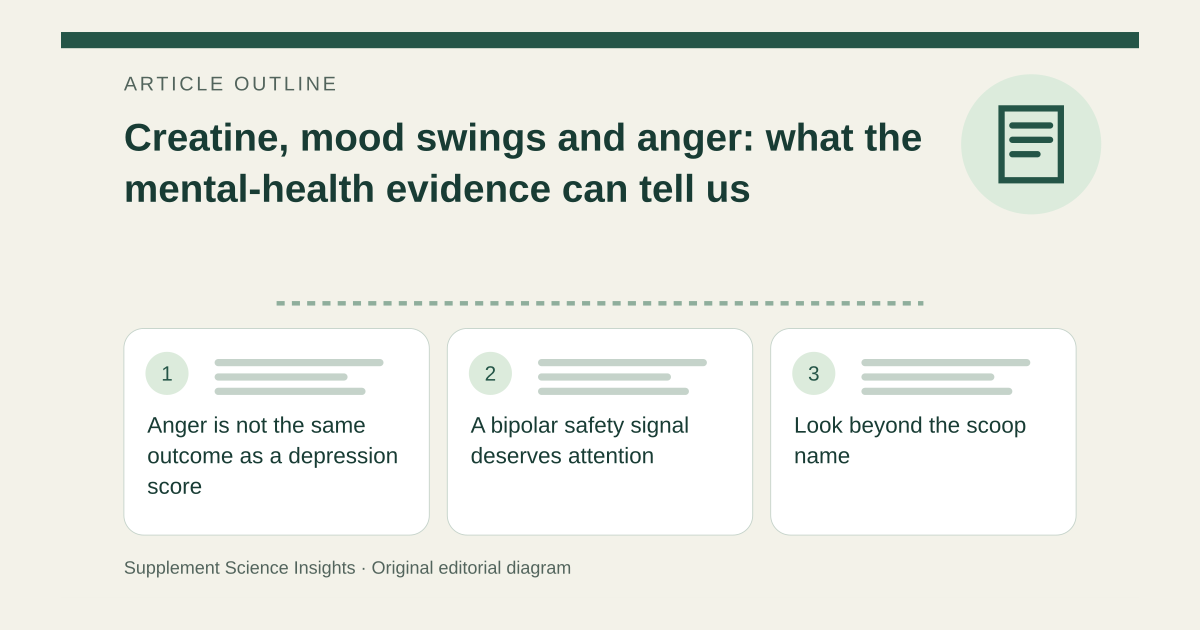
Anger is not the same outcome as a depression score
A 2026 systematic review found five randomized trials of creatine monohydrate in mental disorders: four in major depression and one in bipolar depression. These were short adjunctive-treatment trials. They do not establish how often a healthy gym user becomes angry or irritable after starting creatine. [1]
A bipolar safety signal deserves attention
The review reported two creatine recipients with hypomania or mania in the small bipolar trial. This is a reason for clinical caution, particularly with a bipolar history, rather than proof that creatine commonly causes aggression. The small numbers and short follow-up cannot provide a reliable general-population risk estimate. [1]
Look beyond the scoop name
Caffeine can contribute to anxiety and disrupted sleep, and a pre-workout product may include it alongside creatine. Record the full formula, sleep pattern, medicines and timing of symptoms. A change after starting a blend does not identify which ingredient or circumstance caused it. [2][3]
Recognize a change that needs prompt help
Marked irritability with unusually high energy, much less need for sleep, racing thoughts or impulsive behavior needs a mental-health assessment. Seek urgent help for a crisis or risk of harm. Do not stop prescribed bipolar medicines or substitute a supplement for them. [4]
Keep the evidence in proportion
The psychiatric review had no dedicated funding but disclosed several authors’ creatine-related commercial roles. Its encouraging depression findings are preliminary and do not establish either universal emotional benefit or universal safety across mental disorders. [1]
Use a symptom timeline rather than a causal verdict
Imagine irritability begins after a caffeinated creatine blend and several nights of little sleep. Bring that timeline to a clinician; if the person has a bipolar history or escalating symptoms, do not wait for a supplement experiment to settle the cause. [4][2]
| Observation | Meaning |
|---|---|
| Irritability after a new blend | Review timing and all ingredients |
| Little sleep and unusual energy | Clinical assessment |
| Small bipolar-trial signal | Caution, not a universal incidence rate |
| Prescribed treatment | Do not stop independently |
Sources for this article
- The Effect of Creatine Monohydrate on Mental Disorders: A Systematic Review of Randomized Controlled Trials: Effet du monohydrate de créatine sur les troubles mentaux : examen systématique des essais contrôlés à répartition aléatoire - PMC
Source consulted: 2026-09-21. This is a reference resource, not a claim that we conducted the studies or tested a product. - Spilling the Beans: How Much Caffeine is Too Much? | FDA
Source consulted: 2026-09-21. This is a reference resource, not a claim that we conducted the studies or tested a product. - Dietary Supplements for Exercise and Athletic Performance - Health Professional Fact Sheet
Source consulted: 2026-09-21. This is a reference resource, not a claim that we conducted the studies or tested a product. - Bipolar disorder - NHS
Source consulted: 2026-09-21. This is a reference resource, not a claim that we conducted the studies or tested a product.